Inledning
If you’ve ever dealt with crane or conveyor system installations, you know the frustration: standard round cable glands simply don’t work with flat cables. The result? Compromised IP-klassning1, moisture ingress, and expensive downtime when electrical systems fail unexpectedly.
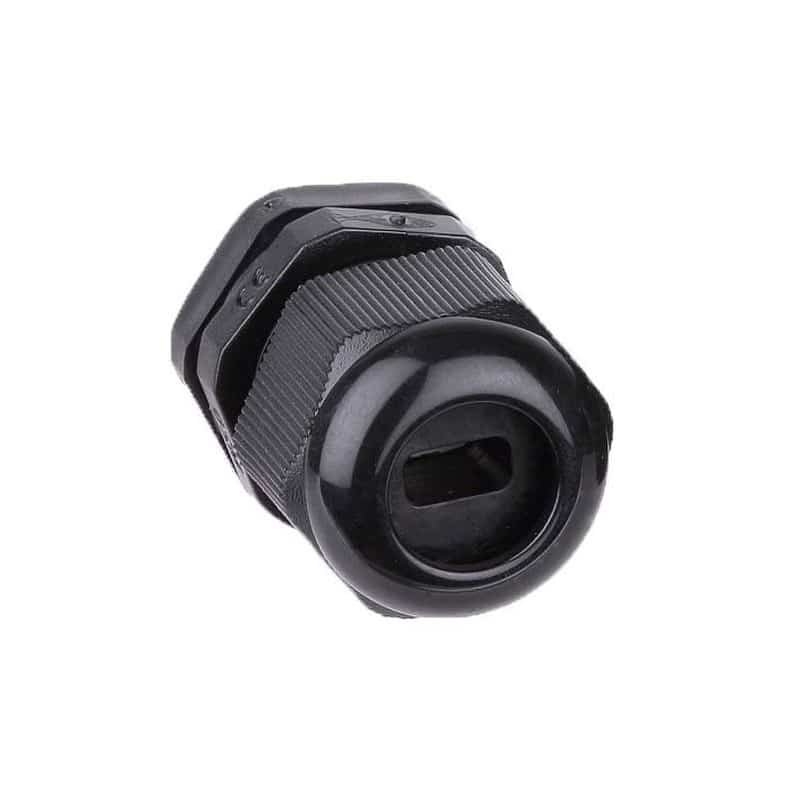
Platta kabelgenomföringar är specialiserade tätningsanordningar som är särskilt konstruerade för platta kablar eller bandkablar som vanligtvis används i mobila maskiner, traverskranar och automatiserade transportörsystem. De ger tillförlitligt IP68-klassat skydd där konventionella genomföringar inte fungerar.
I’m Samuel, Sales Director at Bepto Connector, and over the past decade, I’ve helped hundreds of industrial clients solve this exact challenge. Whether you’re installing a new gantry crane system or retrofitting aging conveyor lines, choosing the right flat cable gland can mean the difference between seamless operation and costly maintenance callbacks. Let me walk you through everything you need to know.
Innehållsförteckning
- What Are Flat Cable Glands and Why Do They Matter?
- How Do Flat Cable Glands Achieve Superior Sealing Performance?
- How to Select the Right Flat Cable Gland for Your Application?
- What Are the Most Common Installation Mistakes to Avoid?
What Are Flat Cable Glands and Why Do They Matter?
Flat cable glands are purpose-built cable entry devices designed to accommodate the unique geometry of flat, ribbon-style cables while maintaining environmental sealing standards.
Unlike round cables that can be secured with traditional compression glands, flat cables present a unique challenge. Their rectangular cross-section creates irregular gaps that standard O-rings and compression nuts cannot seal effectively. This is where specialized flat cable glands become essential.
Key Technical Characteristics:
- Specialized sealing inserts: Contoured rubber or TPE2 gaskets that match flat cable profiles
- Adjustable clamping mechanisms: Accommodate cable thickness variations from 2mm to 15mm
- Materialalternativ: Nylon PA66 for cost-effectiveness, nickel-plated brass for EMC shielding, stainless steel 316L for marine environments
- IP-klassning: Typically IP66, IP67, or IP68 when properly installed
- Temperaturområde: -40°C to +100°C (standard), up to +150°C for specialized variants
- Compliance standards: IEC 624443, UL, CE certified options available

In crane and conveyor applications, these cables power festoon systems, trailing cables, and busbar connections that experience constant flexing and movement. A single seal failure can expose sensitive electronics to dust, moisture, and contaminants—leading to short circuits, corrosion, and unplanned shutdowns.
I remember Hassan, a quality manager from a Dubai port facility, who contacted us after experiencing repeated failures with makeshift sealing solutions. His overhead cranes were shutting down weekly due to moisture ingress in the control cables. After switching to our IP68-rated stainless steel flat cable glands, his maintenance calls dropped by 87% over six months.
How Do Flat Cable Glands Achieve Superior Sealing Performance?
The sealing mechanism in flat cable glands relies on three critical engineering principles: geometric conformity, controlled compression, and material compatibility.
The Three-Layer Sealing System
Layer 1: External Thread Seal
The gland body threads into the enclosure wall with a supporting washer or O-ring, creating the first barrier against environmental ingress. This seal must withstand vibration—critical in mobile crane applications.
Layer 2: Cable Profile Seal
The specialized insert features a contoured channel that matches the flat cable’s exact dimensions. When the compression nut tightens, this insert deforms slightly, creating intimate contact across the entire cable perimeter—not just at pressure points like round glands.
Lager 3: Dragavlastning
An integrated clamp distributes pulling forces across the cable width, preventing seal deformation during cable movement. This is especially important in festoon systems where cables travel dozens of meters daily.
Jämförelse av materialprestanda
| Material | IP-klassning | EMC-skärmning | Motståndskraft mot korrosion | Typisk kostnad | Bästa applikation |
|---|---|---|---|---|---|
| Nylon PA66 | IP66-IP67 | Ingen | Måttlig | $ | Indoor conveyors, dry environments |
| Förnicklad mässing | IP67-IP68 | Utmärkt | Bra | $$ | Industrial automation, EMI-sensitive equipment |
| Rostfritt stål 316L | IP68-IP69K | Bra | Utmärkt | $$$ | Marine cranes, food processing, chemical plants |
| Modifierad PPO | IP67 | Ingen | Utmärkt | $$ | Outdoor applications, UV exposure |
David, a procurement manager from a German automotive plant, initially hesitated about the 40% price premium for brass flat cable glands over nylon. However, after calculating the cost of a single production line stoppage (€15,000/hour), the ROI became obvious. His conveyor systems now run 24/7 with zero cable-related failures over 18 months.
Why Standard Round Glands Fail with Flat Cables
When installers try forcing flat cables through round glands, three problems occur:
- Incomplete seal contact: The circular compression ring only contacts the cable edges, leaving gaps at the flat surfaces
- Cable deformation: Excessive tightening crushes the cable to fit, damaging internal conductors
- Strain relief failure: Round clamps concentrate stress at cable corners, accelerating insulation cracking
Our testing shows that improvised round gland installations on flat cables typically fail IP testing within 200-500 operating hours in dusty environments—compared to 10,000+ hours for proper flat cable glands.
How to Select the Right Flat Cable Gland for Your Application?
Choosing the correct flat cable gland requires matching five critical parameters to your specific operating conditions.
Step 1: Measure Your Cable Dimensions Accurately
You need three measurements:
- Width (W): The cable’s broadest dimension
- Thickness (T): The narrow dimension
- Tolerance range: Cables can vary ±0.5mm due to manufacturing tolerances
Proffstips: Always measure the cable at the installation point, not from the datasheet. Cables can compress or expand slightly during installation.
Steg 2: Bestäm erforderlig IP-klassning
| Typ av miljö | Minsta IP-klassning | Typisk tillämpning |
|---|---|---|
| Indoor, climate-controlled | IP54 | Clean room conveyors |
| Industriell inomhusmiljö | IP65 | Warehouse automation |
| Outdoor protected | IP66 | Covered crane systems |
| Outdoor exposed | IP67 | Port cranes, mining equipment |
| Tvättbara miljöer | IP68/IP69K | Food processing, marine |
Step 3: Assess EMC Requirements
If your cables carry sensitive signals (encoders, sensors, communication lines), EMC-skärmning4 becomes critical:
- High EMI environments: Choose nickel-plated brass with 360° shielding continuity
- Industriell standard: Brass or stainless steel provides adequate shielding
- Low EMI risk: Nylon is sufficient and cost-effective
Step 4: Consider Cable Movement Patterns
Static installations: Standard compression-style flat glands work well
Limited flex (< 1 million cycles): Use glands with reinforced strain relief boots
Continuous flexing (festoon systems): Specify glands with:
- Flexible strain relief sleeves
- Wider clamping surfaces to distribute stress
- Anti-kink cable entry angles
Step 5: Match Material to Environmental Conditions
Kemisk exponering: Stainless steel 316L with EPDM or Viton seals
UV-exponering: Modified PPO housings with UV-stabilized seals
Extreme temperatures: Check seal material ratings—standard NBR works -40°C to +100°C, silicone extends to +180°C
Salt spray/marine: Only stainless steel 316L meets long-term durability requirements
What Are the Most Common Installation Mistakes to Avoid?
Even the best flat cable gland will fail if installed incorrectly. Here are the three mistakes I see most frequently—and how to avoid them.
Mistake #1: Over-Tightening the Compression Nut
Problemet: Installers assume “tighter is better,” crushing the cable and deforming the seal insert.
Lösningen:
- Dra åt kompressionsmuttern för hand tills du känner motstånd.
- Use a torque wrench set to manufacturer specifications (typically 2-4 Nm for nylon, 5-8 Nm for brass)
- Perform an immediate visual check—the cable should not show deformation or color change
Mistake #2: Ignoring Cable Entry Angle
Problemet: Forcing cables to enter at sharp angles creates stress concentration points where insulation cracks over time.
Lösningen:
- Maintain a minimum böjningsradie5 of 10× cable thickness
- Use 90° elbow glands when space constraints force direction changes
- Install support brackets within 150mm of the gland to prevent cable weight from pulling on the seal
Mistake #3: Mixing Incompatible Seal Materials
Problemet: Using glands with NBR seals in applications with oil exposure causes seal degradation.
The solution—Seal Material Compatibility Guide:
- NBR (nitril): General purpose, avoid petroleum oils
- EPDM: Excellent for water, steam, weak acids—poor for oils
- Viton (FKM): Superior chemical resistance, higher cost
- Silikon: Extreme temperature range, lower mechanical strength
Always verify seal material compatibility with any fluids present in your environment. Our technical team at Bepto provides detailed chemical resistance charts for every product.
Installation Best Practice Checklist:
- Clean cable surface and gland threads before assembly
- Apply thread sealant to external threads (not internal cable seal area)
- Verify seal insert orientation matches cable profile
- Test IP rating with pressure/vacuum testing before commissioning
- Document torque values for maintenance records
Slutsats
Flat cable glands aren’t just specialized components—they’re insurance policies against costly downtime in crane and conveyor systems. By matching the right material, IP rating, and sealing mechanism to your specific application, you protect your investment and ensure reliable operation for years.
At Bepto Connector, we manufacture the complete range of flat cable glands with ISO9001 and IATF16949 certified quality control. Whether you need 50 pieces for a pilot project or 5,000 for a fleet upgrade, our engineering team provides technical support from selection through installation. Contact us today for application-specific recommendations and competitive factory-direct pricing.
Vanliga frågor om platta kabelförskruvningar
Q: Can I use a flat cable gland for round cables?
A: No. Flat cable glands have contoured seals designed for rectangular profiles. Using them with round cables creates gaps that compromise IP ratings. Always match gland type to cable geometry.
Q: What’s the maximum cable width flat cable glands can accommodate?
A: Standard flat cable glands handle widths from 6mm to 50mm. For wider festoon cables, custom solutions or multi-cable glands are available. Bepto offers custom tooling for specialized dimensions.
Q: Do flat cable glands work in explosion-proof applications?
A: Yes, but you need ATEX or IECEx certified explosion-proof flat cable glands. These feature specialized flameproof threads and are typically brass or stainless steel. Standard glands lack required certifications.
Q: How often should flat cable glands be inspected in mobile crane applications?
A: Inspect quarterly for visible damage, annually for seal integrity testing. In harsh environments (marine, mining), increase to monthly visual checks. Replace immediately if cracks or deformation appear.
Q: Can flat cable glands maintain IP68 rating with continuous cable movement?
A: Yes, when properly specified. Choose glands with flexible strain relief and ensure cable movement stays within the manufacturer’s flex cycle rating—typically 1-5 million cycles for quality glands.
-
Learn about the Ingress Protection (IP) rating system used to define the sealing effectiveness of electrical enclosures. ↩
-
Explore the physical properties and industrial applications of Thermoplastic Elastomers (TPE) in sealing technology. ↩
-
Access the official international standard for cable glands used in electrical installations. ↩
-
Understand the principles of electromagnetic compatibility (EMC) and how shielding protects sensitive electronic equipment. ↩
-
Discover how to calculate and maintain the minimum bend radius to prevent internal cable damage during installation. ↩