Introduction
Have you ever wondered why your cable gland installation failed, even though you followed all the specifications? The culprit might be something as simple as choosing the wrong clamping range. As someone who’s been in the cable gland business for over a decade, I’ve seen countless projects delayed because engineers overlooked this critical specification.
Cable gland clamping range refers to the minimum and maximum cable outer diameter that a specific gland can securely grip and seal. This range determines whether your gland will provide proper strain relief1, environmental sealing, and long-term reliability for your cable installation.
Just last month, David, a procurement manager from a renewable energy company in Germany, called me in frustration. His team had ordered 500 M20 nylon cable glands for their solar farm project, only to discover that 30% of their cables fell outside the clamping range. The result? Project delays, additional costs, and a very unhappy client. This could have been avoided with proper clamping range selection.
Table of Contents
- What Exactly Is Cable Gland Clamping Range?
- How Do You Determine the Right Clamping Range?
- What Happens When You Get the Clamping Range Wrong?
- Which Factors Affect Clamping Range Performance?
- FAQs About Cable Gland Clamping Range
What Exactly Is Cable Gland Clamping Range?
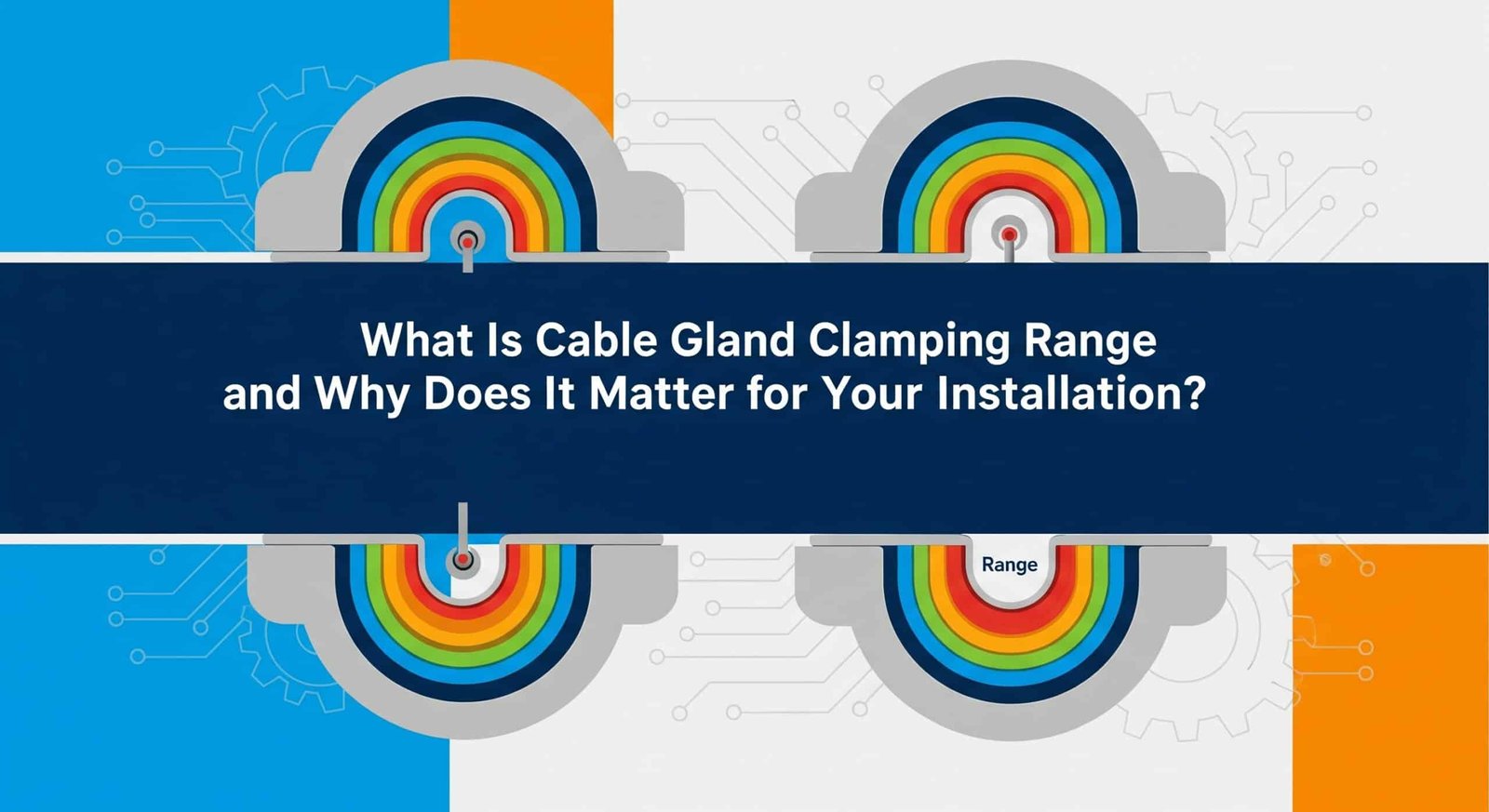
Cable gland clamping range is the span of cable diameters that a gland can accommodate while maintaining proper sealing and strain relief. Think of it as the “sweet spot” where your cable gland performs optimally.
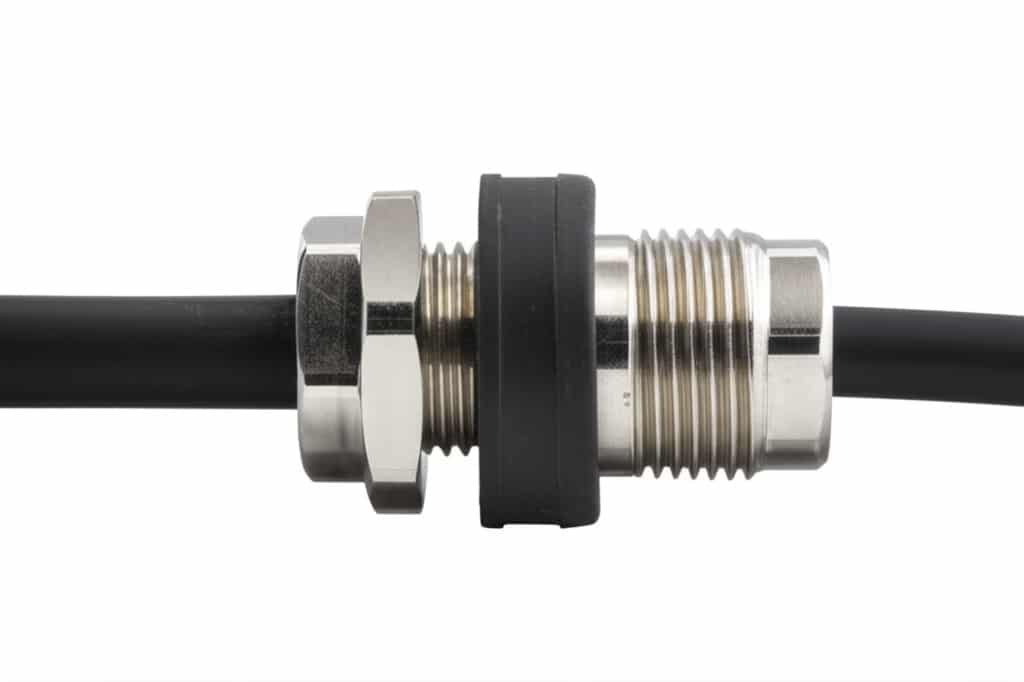
Every cable gland consists of several key components that work together to create this clamping action:
The Anatomy of Clamping
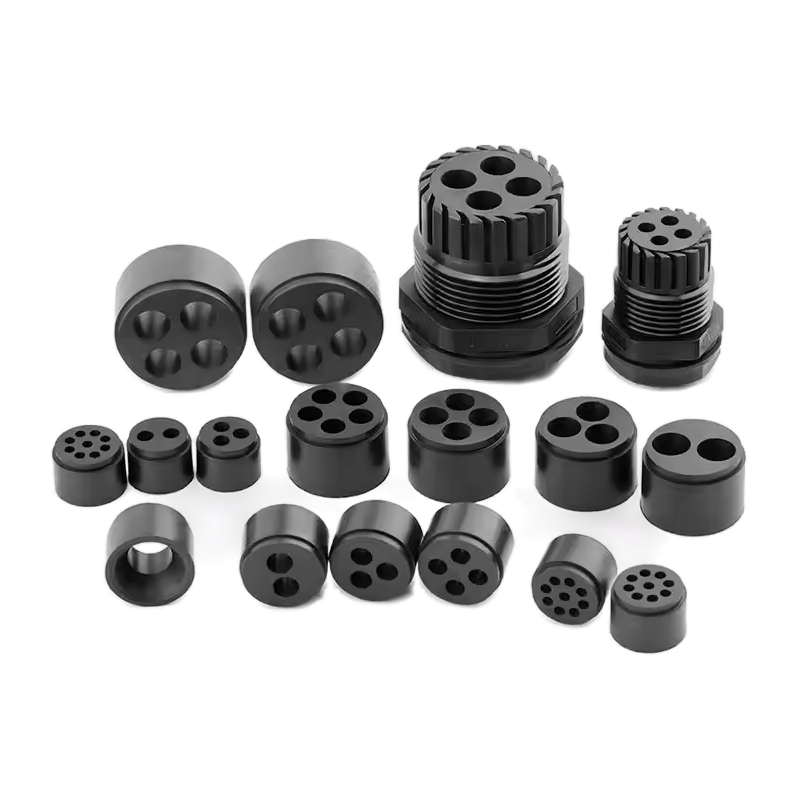
- Sealing Insert: The rubber or elastomer component that compresses around the cable
- Compression Nut: Creates the clamping force when tightened
- Body Thread: Provides the mechanical advantage for compression
- Strain Relief: Distributes mechanical stress across the cable
At Bepto, we manufacture cable glands with precision-engineered clamping ranges. Our nylon cable glands, for example, typically offer ranges like 3-6.5mm for M12 sizes or 6-12mm for M16 sizes. This isn’t arbitrary – these ranges are calculated based on the sealing insert’s compression characteristics and the thread pitch of the compression mechanism.
Why Clamping Range Matters More Than You Think
The clamping range directly impacts three critical performance factors:
- IP Rating2 Maintenance: Proper clamping ensures the advertised IP68 or IP67 rating
- Strain Relief Effectiveness: Prevents cable pullout under mechanical stress
- Long-term Reliability: Maintains seal integrity over temperature cycles and vibration
I remember Hassan, an operations manager at a petrochemical facility in Saudi Arabia, who learned this lesson the hard way. He selected cable glands based solely on thread size, ignoring clamping range. Six months later, several glands failed their IP testing during a routine inspection, requiring a complete replacement program.
How Do You Determine the Right Clamping Range?
The key to selecting the correct clamping range is accurate cable diameter measurement plus understanding your environmental requirements. Here’s my proven three-step process:

Step 1: Measure Your Cable Accurately
Don’t just rely on cable specifications – measure the actual outer diameter including:
- Cable jacket thickness variations
- Any protective sheathing or armor
- Temperature-induced expansion (cables can grow 2-3% in hot environments)
Step 2: Apply the 80% Rule
Never use the extreme ends of a clamping range. I always recommend staying within 80% of the available range for optimal performance. For a 6-12mm range, aim for cables between 7.2-10.8mm diameter.
Step 3: Consider Your Application Environment
| Environment Type | Recommended Range Usage | Reason |
|---|---|---|
| Indoor/Controlled | 60-90% of range | Standard performance adequate |
| Outdoor/Marine | 70-85% of range | Account for thermal cycling |
| Hazardous Area | 75-85% of range | Maximum reliability required |
| High Vibration | 70-80% of range | Prevent loosening over time |
Material Considerations
Different gland materials offer varying clamping characteristics:
- Nylon Glands: Excellent flexibility, ideal for standard applications
- Brass Glands: Superior durability, better for high-temperature environments
- Stainless Steel: Maximum corrosion resistance, perfect for marine applications
- Explosion-proof Glands: Engineered for hazardous area compliance
At Bepto, we’ve invested heavily in precision injection molding equipment to ensure consistent clamping range performance across our entire product line. Our quality control process includes individual range testing for every batch.
What Happens When You Get the Clamping Range Wrong?
Incorrect clamping range selection leads to seal failure, reduced IP rating, and potential safety hazards. The consequences vary depending on whether you’re over-clamping or under-clamping.
Under-Clamping Consequences (Cable Too Small)
When your cable diameter is below the minimum clamping range:
- Inadequate Sealing: Water and dust ingress despite IP rating claims
- Poor Strain Relief: Cable can pull out under minimal force
- Vibration Loosening: Connection degrades over time
- Arc Flash Risk3: In electrical applications, loose connections create hazards
Over-Clamping Problems (Cable Too Large)
Forcing a cable that’s too large creates different issues:
- Seal Damage: Excessive compression can tear or deform sealing elements
- Cable Jacket Damage: Over-compression can compromise cable integrity
- Installation Difficulty: Requires excessive force, often damaging threads
- Premature Failure: Overstressed components fail sooner
Real-World Impact Story
Last year, I worked with Maria, an electrical contractor in Barcelona, who was dealing with recurring failures in an outdoor lighting project. After investigation, we discovered she was using M16 glands (6-12mm range) on 13mm cables. The over-clamping had damaged the sealing inserts, allowing moisture ingress that corroded the connections. Switching to M20 glands (10-14mm range) solved the problem immediately.
Which Factors Affect Clamping Range Performance?
Environmental conditions, installation technique, and material selection all significantly impact how well a cable gland performs within its specified clamping range. Understanding these factors helps optimize your selection.
Temperature Effects
Temperature variations affect both cable diameter and gland materials:
- Cable Expansion: PVC cables can expand 2-3% in direct sunlight
- Sealing Insert Behavior: Rubber becomes harder in cold, softer in heat
- Metal Expansion: Brass and steel glands expand at different rates
Installation Torque Impact
Proper installation torque4 is crucial for clamping range effectiveness:
| Gland Size | Recommended Torque | Over-torque Risk |
|---|---|---|
| M12 | 8-12 Nm | Seal damage |
| M16 | 12-18 Nm | Thread stripping |
| M20 | 18-25 Nm | Cable deformation |
| M25 | 25-35 Nm | Body cracking |
Chemical Compatibility
The cable jacket material must be compatible with the sealing insert:
- PVC Cables: Compatible with most standard sealing materials
- Polyurethane: Requires specific seal compounds
- PTFE: Needs specialized high-temperature seals
- Armored Cables: May require modified clamping mechanisms
Quality Manufacturing Standards
At Bepto, we maintain strict quality control because manufacturing precision directly affects clamping range consistency:
- Injection Molding Tolerances: ±0.05mm on critical dimensions
- Sealing Insert Durometer: Shore A 60-70 for optimal compression
- Thread Accuracy: Class 6g tolerance for smooth operation
- Material Certification: All materials meet REACH and RoHS requirements
Our IATF169495 certification ensures that every cable gland meets automotive industry quality standards, which are among the most stringent in the world.
Conclusion
Understanding cable gland clamping range isn’t just about technical specifications – it’s about ensuring reliable, long-lasting installations that protect your equipment and maintain safety standards. The key takeaways are simple: measure accurately, select conservatively within the range, and consider your environmental conditions.
Remember, at Bepto, we’re not just selling cable glands – we’re providing engineered solutions backed by over a decade of manufacturing expertise. Whether you need standard nylon glands for indoor applications or specialized explosion-proof units for hazardous areas, our team can help you select the perfect clamping range for your specific requirements.
Don’t let clamping range selection become your project’s weak link. When in doubt, reach out to our technical team at www.cableglandsupply.com – we’re here to help ensure your installation succeeds the first time. 😉
FAQs About Cable Gland Clamping Range
Q: What happens if my cable diameter is exactly at the minimum or maximum of the clamping range?
A: While technically within specification, using the extreme ends of the range reduces performance margin. I recommend staying within 80% of the available range for optimal sealing and strain relief, especially in demanding environments.
Q: Can I use a larger cable gland if my cable is smaller than the minimum range?
A: No, this creates inadequate sealing and poor strain relief. Instead, use cable bushings or select a gland with the appropriate smaller clamping range. Proper fit is essential for maintaining IP ratings and safety standards.
Q: How do I measure cable diameter for armored or shielded cables?
A: Measure the complete outer diameter including all layers – jacket, armor, and any protective sheathing. For irregular shapes like flat cables, measure the largest dimension and select glands designed for non-round cables.
Q: Do different cable jacket materials affect clamping range selection?
A: Yes, softer materials like PVC compress more than rigid materials like polyurethane. Account for this by selecting ranges that accommodate the specific material characteristics and ensure chemical compatibility between cable and seal.
Q: How often should I check cable gland clamping in outdoor installations?
A: Inspect annually or after extreme weather events. Temperature cycling, UV exposure, and vibration can affect clamping effectiveness over time. Look for signs of loosening, seal degradation, or moisture ingress during routine maintenance.
-
Learn the importance of strain relief in protecting electrical cables and their terminations from mechanical stress and tension. ↩
-
Review the official International Electrotechnical Commission standard that defines the Ingress Protection (IP) rating system. ↩
-
Understand the dangers of an arc flash, a hazardous electrical explosion, from the Occupational Safety and Health Administration (OSHA). ↩
-
Learn the fundamental engineering principle of torque, the rotational equivalent of linear force, and how it is measured. ↩
-
Discover the rigorous requirements of this global quality management standard for the automotive industry, focused on defect prevention. ↩