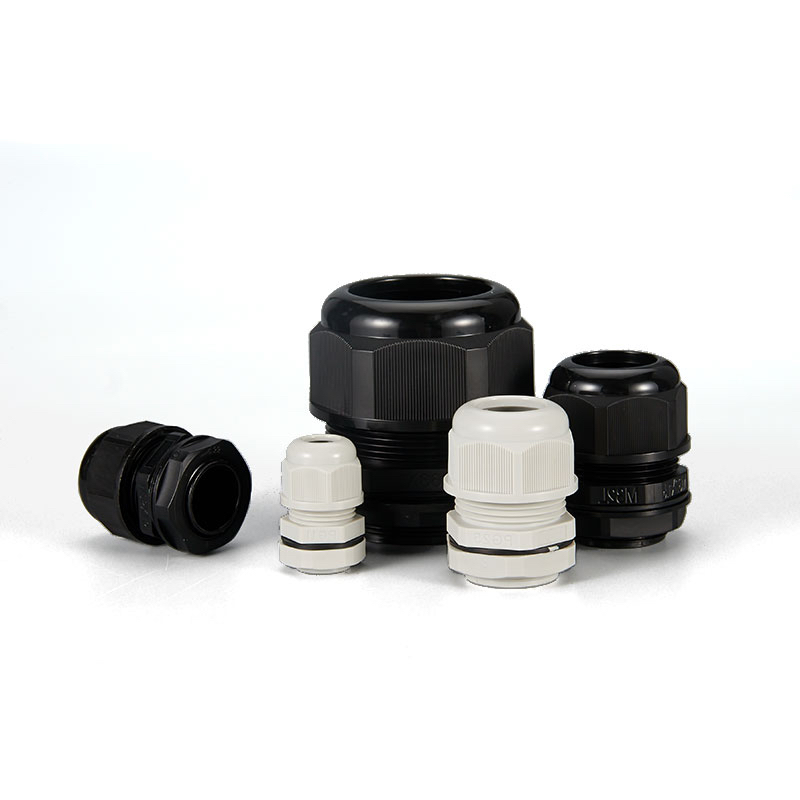
“I need an M20 cable gland,” Tom, a maintenance engineer from a chemical plant in Texas, told me over the phone. “But when I got the part, it didn’t fit my 20mm cable!” This confusion happens daily in our industry. The “20” in M20 doesn’t refer to cable diameter – it’s actually the thread size.
An M20 cable gland features a 20mm metric thread diameter designed to fit cables ranging from 10-14mm outer diameter, providing environmental sealing and strain relief1 through standardized threading and compression mechanisms. Understanding this distinction prevents costly ordering mistakes and installation delays.
After fielding thousands of specification questions over the past decade, I’ve realized that M20 confusion represents a much larger problem: the gap between technical specifications and practical application. Let me break down exactly what these numbers mean and how to use them correctly.
Table of Contents
- What Does the “M20” Actually Specify?
- How Do M20 Thread Specifications Work?
- What Cable Sizes Fit M20 Glands?
- How Do M20 Glands Compare to Other Sizes?
- What Are the Complete M20 Specifications?
- FAQs About M20 Cable Gland Specifications
What Does the “M20” Actually Specify?
The M20 designation is part of the ISO metric thread standard, not a cable size indicator. This fundamental misunderstanding causes more specification errors than any other factor in cable gland selection.
M20 designates a metric thread with 20mm major diameter and 1.5mm thread pitch, following ISO 2622 standards for metric screw threads. The “M” indicates metric threading, while “20” specifies the nominal thread diameter, not the cable accommodation range.

Breaking Down the Designation System
“M” = Metric Thread Standard
- Follows ISO 262 international standard
- Uses millimeter measurements throughout
- Standardized across global markets
- Compatible with metric tooling
“20” = Major Thread Diameter
- 20mm outer thread diameter
- Measured at thread peaks (crests)
- Determines enclosure hole size needed
- Not related to cable diameter capacity
Why This Confusion Exists
The confusion stems from logical assumptions that don’t match technical reality:
Intuitive Thinking: “M20 should fit 20mm cables”
Technical Reality: M20 fits 10-14mm cables typically
Root Cause: Thread size ≠ Cable accommodation range
Maria, a project manager from Barcelona, learned this the hard way when she ordered 50 M20 glands for 18mm cables. “I assumed M20 meant 20mm cable capacity,” she told me. “Now I understand why the specifications seemed so confusing!”
International Variations
While M20 is standardized globally, some regions use different designation systems:
NPT3 (North America): 3/4″ NPT roughly equivalent to M20
PG (Germany/Europe): PG13.5 similar cable range to M20
Metric (Global): M20 x 1.5 full specification
At Bepto, we manufacture M20 glands to strict ISO standards, ensuring compatibility across international projects. Our technical team at cableglandsupply.com can help navigate these regional differences.
How Do M20 Thread Specifications Work?
Understanding metric thread specifications helps you select compatible components and avoid installation problems. The complete M20 specification includes several critical dimensions.
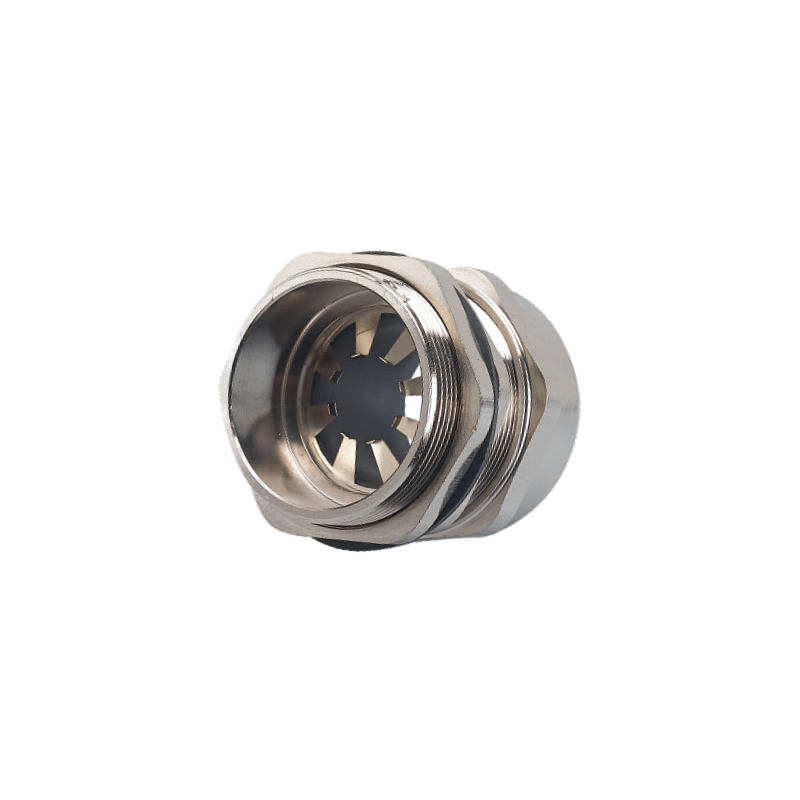
M20 threads follow ISO 262 standard with 20mm major diameter, 1.5mm pitch, 60-degree thread angle, and specific tolerance classes that determine fit and sealing performance. Each parameter affects installation and performance.
Complete M20 Thread Specification
Major Diameter (D): 20.000mm
- Outer thread diameter at peaks
- Determines hole size in enclosure wall
- Critical for proper thread engagement
Pitch (P): 1.5mm
- Distance between adjacent thread peaks
- Affects thread strength and sealing
- Standard coarse pitch for M20
Minor Diameter (d1): 18.376mm
- Inner thread diameter at roots
- Determines thread engagement area
- Critical for mechanical strength
Thread Angle: 60 degrees
- Standard ISO metric angle
- Ensures proper thread form
- Affects sealing surface contact
Thread Tolerance Classes
M20 glands use specific tolerance classes for different applications:
6g (External Thread – Gland):
- General purpose tolerance
- Good fit with reasonable clearance
- Most common for cable glands
6H (Internal Thread – Enclosure):
- Standard internal thread tolerance
- Matches 6g external threads
- Provides proper engagement
Installation Considerations
Thread Engagement: Minimum 1.5 x pitch (2.25mm for M20) required for full strength. In thin-wall applications, this becomes critical for reliable sealing.
Torque Requirements: Typically 15-25 Nm for M20 glands, depending on material and sealing system. Over-torquing can damage threads or seals.
Tool Requirements: 27mm hex wrench standard for M20 gland installation. Some designs use different hex sizes – always verify before installation.
What Cable Sizes Fit M20 Glands?
This is where the rubber meets the road – actual cable accommodation ranges for M20 glands. The answer depends on gland design and sealing system used.
Standard M20 cable glands accommodate cables from 10-14mm outer diameter, with some specialized designs handling 6-12mm or 8-16mm ranges depending on sealing insert configuration and compression mechanism design.
Standard Cable Range Breakdown
Typical M20 Range: 10-14mm
- Most common specification
- Covers standard control and power cables
- Reliable sealing across full range
- Good strain relief performance
Extended Range Options:
- Narrow Range: 6-12mm (precision applications)
- Wide Range: 8-16mm (versatile installations)
- Split Range: Multiple inserts for different sizes
Cable Measurement Guidelines
To ensure proper fit, measure cables correctly:
Outer Diameter: Include all jacketing and sheathing
Oval Cables: Measure at widest point
Temperature Effects: Account for thermal expansion (typically 2-3%)
Compression Allowance: Sealing requires some cable deformation
Application-Specific Considerations
Power Cables: Often have thicker insulation, may need larger M25 size
Control Cables: Usually fit well within standard M20 range
Armored Cables: Armor adds significant diameter, verify carefully
Flexible Cables: May compress more, allowing tighter fit
Real-World Examples
| Cable Type | Typical OD | M20 Compatibility | Notes |
|---|---|---|---|
| 3-core 2.5mm² | 11-12mm | Excellent fit | Standard power cable |
| 4-core 1.5mm² | 9-10mm | Good fit | Control cable |
| CAT6 Ethernet | 6-7mm | Requires narrow range | Communication cable |
| 16mm² power | 15-16mm | Too large | Needs M25 |
How Do M20 Glands Compare to Other Sizes?
Understanding the complete metric gland size range helps you select the optimal size for any application. M20 sits in the middle of the common size range.
M20 glands provide the sweet spot for medium-sized cables, offering better sealing than smaller M16 glands while being more compact than M25 glands, making them ideal for 10-14mm cable applications.
Complete Metric Size Comparison
| Thread Size | Cable Range | Hex Size | Common Applications |
|---|---|---|---|
| M12 | 3-6.5mm | 19mm | Sensor cables, small control |
| M16 | 4-10mm | 22mm | Control cables, instrumentation |
| M20 | 10-14mm | 27mm | Standard power/control |
| M25 | 13-18mm | 32mm | Heavy power cables |
| M32 | 18-25mm | 41mm | Large power feeds |
| M40 | 22-32mm | 50mm | Industrial power distribution |
Selection Decision Matrix
Choose M16 When:
- Cable diameter 8mm or less
- Space is extremely limited
- Cost optimization critical
- Light-duty applications
Choose M20 When:
- Cable diameter 10-14mm
- Standard industrial applications
- Good balance of size/performance needed
- Most versatile option
Choose M25 When:
- Cable diameter over 13mm
- Heavy-duty applications
- Maximum strain relief needed
- Future cable upgrades possible
Performance Differences
Sealing Surface Area: Larger glands provide more sealing surface, potentially better IP ratings
Strain Relief: Larger glands handle higher cable tensions and weights
Installation Space: Smaller glands require less panel space and clearance
Cost: Generally increases with size due to material usage
Regional Equivalents
Understanding equivalent sizes in different standards:
M20 Metric ≈ Equivalents:
- NPT: 3/4″ (19.05mm thread)
- PG: PG13.5 (13.5mm thread, similar cable range)
- BSP: 3/4″ BSP (19.05mm thread)
Note: These are approximate equivalents – always verify exact specifications for critical applications.
What Are the Complete M20 Specifications?
A complete M20 specification includes much more than just thread size. Understanding all parameters ensures proper selection and installation.
Complete M20 cable gland specifications include thread dimensions (M20 x 1.5), cable range (10-14mm), IP rating (typically IP68), material options, temperature range, and installation requirements for reliable performance.
Dimensional Specifications
Thread Specifications:
- Designation: M20 x 1.5
- Major Diameter: 20.000mm ±0.2mm
- Pitch: 1.5mm
- Thread Length: Typically 8-12mm
- Hex Size: 27mm standard
Overall Dimensions:
- Total Length: 35-45mm (varies by design)
- Hex Height: 8-12mm
- Body Diameter: 25-28mm maximum
- Panel Thickness: 1-6mm typical range
Performance Specifications
Environmental Protection:
- IP Rating4: IP68 standard (some IP67)
- Pressure Rating: 5-10 bar typical
- Temperature Range: -40°C to +100°C (nylon), +200°C (brass)
- UV Resistance: Varies by material
Mechanical Properties:
- Tensile Strength: 500-1000N typical
- Torque Rating: 15-25 Nm installation
- Vibration Resistance: Per IEC 60068-2-6
- Impact Resistance: IK08 typical
Material Options and Properties
Nylon (PA66):
- Temperature: -40°C to +100°C
- Chemical Resistance: Good general purpose
- UV Resistance: Requires UV stabilizers
- Cost: Most economical option
- Applications: General industrial use
Brass (CuZn39Pb3):
- Temperature: -40°C to +200°C
- Corrosion Resistance: Excellent
- EMC Shielding: Good conductivity
- Durability: Superior longevity
- Applications: Harsh environments
Stainless Steel (316L):
- Temperature: -40°C to +200°C
- Corrosion Resistance: Exceptional
- Chemical Resistance: Outstanding
- Cost: Premium option
- Applications: Marine, chemical, food
Certification and Standards
International Standards:
- ISO 262: Metric thread specifications
- IEC 62444: Cable gland performance
- IP 60529: Ingress protection ratings
- UL 514B: North American safety standards
Industry Certifications:
- ATEX5: Explosion-proof variants
- IECEx: International explosive atmospheres
- UL Listed: North American safety approval
- CE Marking: European conformity
Conclusion
Understanding what “M20 cable gland” actually means transforms confusion into confidence. The “20” refers to the 20mm metric thread diameter, not cable size – M20 glands typically accommodate 10-14mm cables with their standardized threading and sealing systems.
From Tom’s initial confusion about cable sizing to Maria’s ordering mistakes, I’ve seen how proper specification understanding prevents costly errors and project delays. The key is recognizing that thread size and cable capacity are completely different parameters that must be understood separately.
At Bepto, we manufacture M20 cable glands to exact ISO specifications, ensuring reliable performance across diverse applications. Our technical documentation clearly separates thread specifications from cable accommodation ranges, eliminating the confusion that plagues this industry.
Ready to specify M20 glands correctly for your next project? Visit cableglandsupply.com for detailed technical specifications, application guides, and expert support to ensure you get exactly what you need.
FAQs About M20 Cable Gland Specifications
Q: Why doesn’t an M20 cable gland fit a 20mm cable?
A: The “20” in M20 refers to the 20mm thread diameter, not cable capacity. M20 glands typically accommodate 10-14mm cables. The thread size determines the hole size needed in your enclosure wall, while cable range depends on the internal sealing mechanism design.
Q: What’s the difference between M20 x 1.5 and just M20?
A: M20 x 1.5 is the complete specification including the 1.5mm thread pitch. “M20” alone assumes the standard coarse pitch of 1.5mm. Always specify the complete designation (M20 x 1.5) for technical accuracy and to avoid confusion with fine pitch variants.
Q: Can I use an M20 gland in a 3/4″ NPT hole?
A: No, these are different thread standards. M20 has a 20mm diameter with metric threading, while 3/4″ NPT has a 19.05mm diameter with tapered pipe threads. You need the correct thread type for proper sealing and mechanical integrity.
Q: What happens if I use an M20 gland with a cable that’s too small or too large?
A: Undersized cables won’t seal properly, allowing water ingress and losing strain relief. Oversized cables may not fit at all, or if forced, can damage the sealing system and compromise IP ratings. Always match cable diameter to the gland’s specified range.
Q: How do I measure my cable to determine if it fits an M20 gland?
A: Measure the outer diameter including all jacketing and sheathing at the cable’s widest point. For M20 glands, your cable should measure 10-14mm typically. Account for temperature expansion (add 2-3%) and ensure the measurement falls comfortably within the gland’s specified range.
-
Learn about the function of strain relief in protecting electrical connections. ↩
-
Access the official documentation for the ISO general-purpose metric screw thread standard. ↩
-
Understand the differences between NPT (National Pipe Taper) and metric thread standards. ↩
-
See a detailed chart explaining the different levels of Ingress Protection (IP) ratings. ↩
-
Read about the ATEX directive for equipment used in potentially explosive environments. ↩