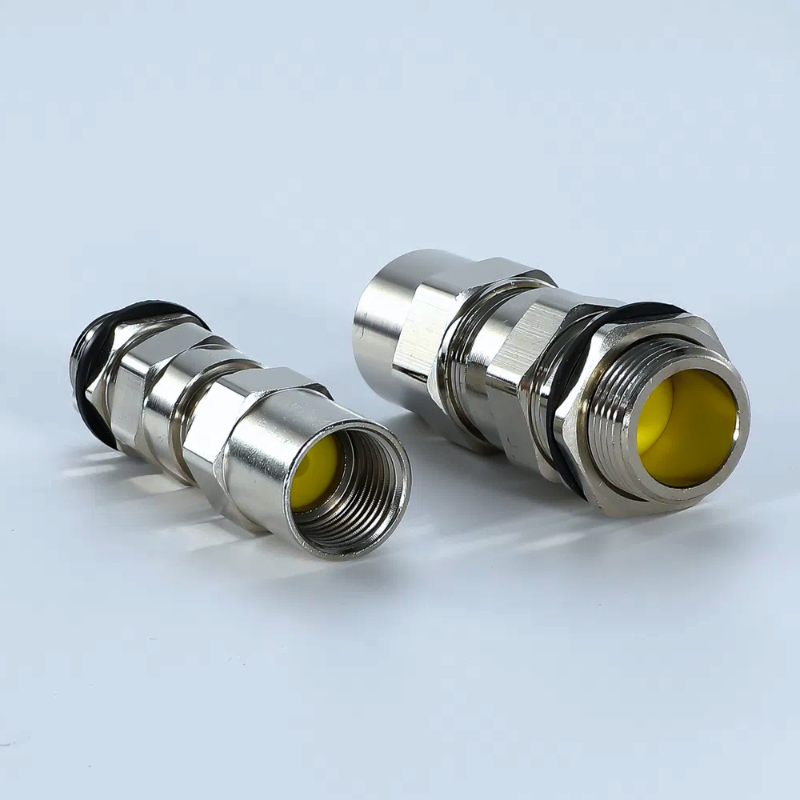
When Hassan, a senior electrical engineer from a UAE power distribution company, called me last year about 11kV cable gland failures, I knew we were dealing with serious safety implications. Three glands had failed within six months, causing arc faults and shutting down critical infrastructure. The root cause? Standard low-voltage glands were mistakenly specified for high-voltage applications. This isn’t just about equipment failure – it’s about preventing catastrophic incidents that can cost lives and millions in damages.
11kV high voltage cable glands require specialized design features including enhanced insulation systems, increased creepage distances1, corona-resistant materials, and rigorous testing to IEC 62271 standards2. Unlike standard cable glands, HV glands must withstand electrical stress, prevent partial discharge3, and maintain insulation integrity under extreme conditions.
The complexity of 11kV applications means there’s zero tolerance for shortcuts or assumptions. Every component must be engineered specifically for high-voltage service, with materials, dimensions, and testing protocols that far exceed standard requirements. Let me guide you through the critical technical requirements that ensure safe, reliable 11kV installations.
Table of Contents
- What Makes 11kV Cable Glands Different from Standard Glands?
- Which Insulation and Dielectric Requirements Must Be Met?
- How Do Creepage and Clearance Distances Affect Design?
- What Testing Standards Apply to 11kV Cable Glands?
- Which Materials and Construction Methods Ensure Reliability?
- FAQs About 11kV High Voltage Cable Glands
What Makes 11kV Cable Glands Different from Standard Glands?
The transition from low voltage to 11kV represents a fundamental shift in engineering requirements and safety considerations.
11kV cable glands incorporate specialized insulation systems, corona shields, enhanced material specifications, and rigorous testing protocols that are completely absent in standard low-voltage designs. The electrical stress at 11kV creates challenges that require purpose-built solutions, not adaptations of existing products.

Fundamental Design Differences
Electrical Stress Management:
- Standard Glands: Focus on mechanical sealing and basic insulation
- 11kV Glands: Engineered for electric field control and stress distribution
- Corona Prevention: Specialized geometries eliminate sharp edges and stress concentrations
- Field Grading: Integrated systems to manage electrical field distribution
Insulation Systems:
- Enhanced Dielectric Strength: Materials rated for sustained high voltage exposure
- Multi-Layer Construction: Primary and secondary insulation barriers
- Environmental Resistance: UV, ozone, and chemical resistance for outdoor applications
- Tracking Resistance: Materials that resist surface degradation from electrical stress
Mechanical Construction:
- Robust Housing: Thicker walls and reinforced construction for mechanical integrity
- Precision Tolerances: Tighter manufacturing tolerances for consistent performance
- Corrosion Resistance: Enhanced materials for long-term reliability
- Vibration Resistance: Designed for substation and industrial environments
Critical Performance Parameters
At Bepto, our 11kV glands must meet these enhanced specifications:
| Parameter | Standard Gland | 11kV Requirement | Safety Margin |
|---|---|---|---|
| Dielectric Strength | 1-3kV | 28kV (1 min test) | 250% of rated voltage |
| Creepage Distance | 5-10mm | 280mm minimum | Per IEC 62271 |
| Tracking Resistance | CTI 175 | CTI 600 minimum | Severe pollution class |
| Corona Inception | Not specified | >15kV | Above operating voltage |
| Temperature Rating | 70°C | 90°C continuous | Extended thermal capability |
Application-Specific Considerations
Substation Environments:
- Extreme temperature cycling (-40°C to +85°C)
- High altitude operation (reduced air density)
- Seismic resistance requirements
- EMC compatibility with protection systems
Industrial Applications:
- Chemical resistance for process environments
- Vibration resistance for rotating machinery
- Explosion-proof variants for hazardous areas
- Integration with existing cable systems
David, a project manager for a Scottish wind farm, learned these differences the hard way. Initially specifying standard IP68 glands for their 11kV collector system, they experienced multiple failures during commissioning. The standard glands couldn’t handle the electrical stress, leading to tracking, corona4, and eventual flashover. Switching to proper 11kV-rated glands eliminated all issues and provided the reliability needed for 25-year operation.
Which Insulation and Dielectric Requirements Must Be Met?
Insulation integrity represents the most critical aspect of 11kV cable gland design and performance.
11kV cable glands must provide primary insulation rated for continuous operation at system voltage, secondary insulation for fault protection, and specialized materials that resist electrical degradation, tracking, and corona formation. The insulation system must maintain integrity throughout the product’s operational life under all specified conditions.
Primary Insulation Requirements
Dielectric Strength Standards:
- Continuous Operating Voltage: 11kV RMS
- Lightning Impulse: 75kV (1.2/50μs waveform5)
- Switching Impulse: 60kV (250/2500μs waveform)
- Power Frequency Test: 28kV for 1 minute
- Partial Discharge: <10pC at 1.1 times rated voltage
Material Specifications:
- Volume Resistivity: >10¹⁴ Ω·cm minimum
- Dielectric Constant: Stable across temperature range
- Loss Tangent: <0.01 at operating frequency
- Breakdown Strength: >20kV/mm in oil, >15kV/mm in air
Advanced Insulation Technologies
Cycloaliphatic Epoxy Systems:
- Superior electrical properties compared to standard epoxy
- Excellent UV resistance for outdoor applications
- Low water absorption preventing degradation
- Proven track record in high-voltage applications
Silicone Rubber Compounds:
- Exceptional tracking and erosion resistance (CTI 600)
- Hydrophobic surface properties
- Wide temperature range capability (-50°C to +200°C)
- Self-healing properties under electrical stress
Polyethylene and Cross-Linked Variants:
- Low dielectric constant and loss factor
- Excellent chemical resistance
- Proven cable insulation compatibility
- Long-term stability under electrical stress
Environmental Degradation Resistance
Tracking Resistance (IEC 60112):
- CTI Rating: Minimum 600 (severe pollution conditions)
- Proof Tracking Index: >600V without failure
- Erosion Resistance: Minimal material loss under arc exposure
- Recovery Properties: Ability to withstand multiple stress events
Corona and Partial Discharge Management:
- Corona Inception Voltage: >15kV (above operating level)
- Partial Discharge Extinction: <5kV (well below operating voltage)
- Ozone Resistance: No cracking after 168 hours at 50pphm
- UV Stability: <5% property degradation after 1000 hours
Quality Assurance Testing
Our 11kV insulation systems undergo comprehensive testing:
Routine Tests (Every Product):
- High voltage withstand test (28kV, 1 minute)
- Partial discharge measurement (<10pC)
- Insulation resistance (>10¹² Ω)
- Visual inspection for defects
Type Tests (Design Qualification):
- Lightning impulse withstand (75kV)
- Switching impulse withstand (60kV)
- Tracking resistance verification
- Long-term aging studies (1000+ hours)
Special Tests (Application Specific):
- Seismic qualification testing
- Altitude correction factors
- Chemical compatibility studies
- Thermal cycling endurance
How Do Creepage and Clearance Distances Affect Design?
Proper creepage and clearance distances are fundamental to preventing flashover and ensuring long-term reliability in 11kV applications.
Creepage distance (surface path) and clearance distance (air gap) must meet IEC 62271 requirements with minimum 280mm creepage for 11kV systems in severe pollution environments. These distances prevent surface flashover and air breakdown under normal and fault conditions.
Understanding Distance Requirements
Clearance Distance (Air Gap):
- Definition: Shortest distance through air between conductive parts
- 11kV Requirement: 95mm minimum in air
- Altitude Correction: Increased distances above 1000m elevation
- Safety Factor: 150% margin above breakdown threshold
Creepage Distance (Surface Path):
- Definition: Shortest path along insulating surface
- Pollution Class IV: 280mm minimum for severe industrial environments
- Pollution Class III: 200mm for moderate pollution
- Material Factor: Adjusted based on tracking resistance
Design Implementation Strategies
Geometric Optimization:
- Shed Design: Multiple umbrella-like projections increase surface path
- Rib Configuration: Vertical ribs prevent water bridging
- Smooth Transitions: Eliminate sharp edges that concentrate electric field
- Drainage Features: Channels direct water away from critical areas
Material Integration:
- Hydrophobic Surfaces: Silicone rubber maintains water repellency
- Self-Cleaning Properties: Smooth surfaces resist contamination buildup
- UV Stabilization: Prevents surface degradation that reduces distances
- Chemical Resistance: Maintains properties in industrial environments
Environmental Considerations
Pollution Classification (IEC 60815):
| Class | Environment | Creepage Distance | Typical Applications |
|---|---|---|---|
| I – Light | Rural, low density | 160mm | Residential areas |
| II – Medium | Industrial, moderate | 200mm | Light industrial |
| III – Heavy | Industrial, coastal | 240mm | Heavy industrial |
| IV – Very Heavy | Desert, chemical | 280mm | Severe environments |
Altitude Effects:
- Sea Level: Standard distances apply
- 1000-3000m: 10-25% increase required
- Above 3000m: Significant derating necessary
- Correction Factors: Per IEC 62271-1 standards
Hassan’s UAE installation required Class IV pollution rating due to desert conditions and industrial environment. The combination of sand, salt spray, and chemical emissions demanded maximum creepage distances. Our design incorporated 320mm creepage (15% above minimum) with specialized shed geometry optimized for desert conditions.
Verification and Testing
Design Verification:
- 3D modeling to verify minimum distances
- Electric field analysis using finite element methods
- Prototype testing under simulated pollution conditions
- Long-term exposure studies in representative environments
Production Quality Control:
- Dimensional inspection of critical distances
- Surface finish verification for proper drainage
- Material property confirmation for tracking resistance
- Final electrical testing before shipment
What Testing Standards Apply to 11kV Cable Glands?
Comprehensive testing according to international standards ensures 11kV cable glands meet safety and performance requirements throughout their operational life.
11kV cable glands must comply with IEC 62271 series standards, including type tests, routine tests, and special application tests that verify electrical, mechanical, and environmental performance under all specified conditions. Testing protocols are far more rigorous than standard cable gland requirements.
Primary Testing Standards
IEC 62271-1: Common Specifications
- Scope: General requirements for HV switchgear and controlgear
- Voltage Ratings: Standard voltage levels and test procedures
- Environmental Conditions: Temperature, humidity, altitude specifications
- Safety Requirements: Personnel protection and equipment safety
IEC 62271-3: Seismic Requirements
- Seismic Qualification: Testing for earthquake resistance
- Mounting Requirements: Proper installation methods
- Performance Criteria: Operational requirements during/after seismic events
- Documentation: Certification and installation guidelines
IEC 60840: Power Cables >30kV
- Cable Interface: Compatibility with HV cable systems
- Installation Requirements: Proper termination methods
- Performance Standards: Long-term reliability expectations
- Testing Protocols: Electrical and mechanical verification
Comprehensive Test Matrix
Type Tests (Design Qualification):
| Test Category | Standard | Test Voltage/Condition | Duration | Acceptance Criteria |
|---|---|---|---|---|
| Dielectric | IEC 62271-1 | 28kV, 50Hz | 60 seconds | No breakdown |
| Lightning Impulse | IEC 62271-1 | 75kV, 1.2/50μs | 15 impulses | No flashover |
| Switching Impulse | IEC 62271-1 | 60kV, 250/2500μs | 15 impulses | No flashover |
| Partial Discharge | IEC 62271-1 | 12.1kV (1.1×Un) | 30 minutes | <10pC |
| Temperature Rise | IEC 62271-1 | Rated current | Until stable | <65K rise |
| Short Circuit | IEC 62271-1 | 25kA, 1 second | 3 operations | No damage |
Routine Tests (Every Product):
- High Voltage Withstand: 28kV for 60 seconds
- Partial Discharge: Measurement at 1.1 times rated voltage
- Insulation Resistance: >1000MΩ at 500V DC
- Mechanical Operation: Full assembly/disassembly cycle
- Dimensional Verification: Critical distances and tolerances
Special Tests (Application Specific):
- Seismic Qualification: Per IEC 62271-3
- Pollution Performance: Artificial pollution testing
- Thermal Cycling: -40°C to +85°C, 100 cycles
- UV Exposure: 1000 hours accelerated aging
- Chemical Resistance: Specific environmental exposures
Advanced Testing Capabilities
At Bepto, our 11kV testing facility includes:
High Voltage Laboratory:
- AC Test Set: 0-100kV, 50/60Hz, 10kVA capacity
- Impulse Generator: Lightning and switching impulse capability
- Partial Discharge Detection: <1pC sensitivity
- Environmental Chamber: -50°C to +150°C, humidity control
Mechanical Testing:
- Seismic Simulator: 3-axis earthquake simulation
- Vibration Testing: Sine and random vibration profiles
- Impact Testing: Mechanical shock resistance
- Fatigue Testing: Long-term mechanical cycling
Environmental Testing:
- Salt Spray Chamber: Corrosion resistance verification
- UV Chamber: Accelerated weathering simulation
- Pollution Testing: Artificial contamination studies
- Chemical Exposure: Specific industrial environments
Certification and Documentation
Third-Party Verification:
- KEMA/DNV GL: Independent testing and certification
- CESI: European testing authority recognition
- TUV: German technical verification
- Local Authorities: Country-specific approvals
Quality Documentation:
- Type Test Reports: Comprehensive test results
- Routine Test Certificates: Individual product verification
- Installation Instructions: Proper application guidance
- Maintenance Procedures: Long-term care requirements
Which Materials and Construction Methods Ensure Reliability?
Material selection and construction methods for 11kV cable glands require specialized approaches that far exceed standard electrical component requirements.
11kV cable glands utilize aerospace-grade materials including marine stainless steel housings, cycloaliphatic epoxy insulators, and specialized elastomers that maintain properties under electrical stress, environmental exposure, and mechanical loading throughout 25+ year service life. Every material choice directly impacts safety and reliability.
Housing Materials and Specifications
316L Stainless Steel (Primary Choice):
- Corrosion Resistance: Superior performance in marine/industrial environments
- Mechanical Properties: 580MPa tensile strength, excellent fatigue resistance
- Electrical Properties: Non-magnetic, excellent grounding continuity
- Fabrication: Precision machining with controlled surface finish
- Certification: Mill test certificates with full traceability
Aluminum Alloy 6061-T6 (Weight-Critical Applications):
- Weight Advantage: 65% lighter than stainless steel
- Strength-to-Weight: Excellent mechanical properties
- Corrosion Protection: Hard anodizing or specialized coatings
- Thermal Properties: Superior heat dissipation
- Limitations: Requires careful galvanic corrosion prevention
Brass Alloy (Indoor Applications):
- Machinability: Excellent for complex geometries
- Electrical Properties: High conductivity for grounding
- Cost Effectiveness: Lower material costs
- Limitations: Outdoor use requires protective coatings
- Applications: Switchgear and indoor installations
Insulation Material Systems
Cycloaliphatic Epoxy Resin:
- Dielectric Strength: 25kV/mm minimum breakdown strength
- Tracking Resistance: CTI 600 rating for severe environments
- UV Resistance: Excellent outdoor weathering properties
- Temperature Range: -40°C to +130°C continuous operation
- Processing: Vacuum casting for void-free construction
Silicone Rubber Compounds:
- Hydrophobic Properties: Self-cleaning surface characteristics
- Flexibility: Maintains elasticity across temperature range
- Electrical Properties: High volume resistivity, low loss factor
- Environmental Resistance: Ozone, UV, and chemical resistance
- Flame Resistance: Self-extinguishing properties
Cross-Linked Polyethylene (XLPE):
- Cable Compatibility: Matches cable insulation properties
- Moisture Resistance: Excellent water barrier properties
- Thermal Stability: Maintains properties at elevated temperatures
- Processing: Electron beam or chemical cross-linking
- Long-term Stability: Proven 30+ year service life
Sealing System Engineering
Primary Sealing Elements:
- EPDM Compounds: Excellent ozone and weather resistance
- Shore Hardness: 70-80 durometer for optimal compression
- Temperature Rating: -40°C to +150°C service range
- Compression Set: <25% after 1000 hours at 125°C
- Chemical Resistance: Broad spectrum compatibility
Secondary Sealing Systems:
- Backup O-rings: Redundant sealing for critical applications
- Grease Barriers: Long-term lubrication and corrosion protection
- Drainage Systems: Controlled moisture management
- Pressure Relief: Prevents internal pressure buildup
- Monitoring Capability: Optional leak detection systems
Advanced Manufacturing Processes
Precision Machining:
- CNC Equipment: 5-axis machining centers for complex geometries
- Surface Finish: Ra 0.8μm maximum for sealing surfaces
- Dimensional Tolerance: ±0.05mm on critical dimensions
- Quality Control: CMM inspection of all critical features
- Traceability: Full material and process documentation
Specialized Assembly Techniques:
- Clean Room Assembly: Contamination-free environment
- Torque Specifications: Calibrated tools with documentation
- Leak Testing: Helium leak detection to 10⁻⁹ std cc/sec
- Electrical Testing: 100% high voltage testing
- Final Inspection: Multi-point quality verification
David’s Scottish wind farm project demanded materials that could withstand coastal salt spray, temperature cycling from -20°C to +40°C, and 25-year service life. We specified 316L stainless steel housings with specialized cycloaliphatic epoxy insulators and marine-grade EPDM seals. After five years of operation, all glands maintain perfect performance with no maintenance required.
Quality Assurance and Traceability
Material Certification:
- Mill Test Certificates: Chemical composition and mechanical properties
- Electrical Testing: Dielectric strength and tracking resistance
- Environmental Testing: UV, ozone, and chemical resistance
- Batch Tracking: Full traceability throughout supply chain
- Shelf Life Management: Controlled storage and rotation
Process Validation:
- First Article Inspection: Complete dimensional and functional verification
- Statistical Process Control: Continuous monitoring of critical parameters
- Periodic Audits: Third-party verification of processes
- Continuous Improvement: Ongoing optimization based on field performance
- Customer Feedback Integration: Real-world performance data incorporation
Conclusion
11kV high voltage cable glands represent sophisticated engineered products that demand specialized design, materials, and manufacturing processes far beyond standard electrical components. The technical requirements encompass enhanced insulation systems, precise creepage and clearance distances, rigorous testing protocols, and premium materials engineered for decades of reliable service.
Success in 11kV applications requires understanding that every aspect – from material selection to final testing – must be optimized for high voltage service. There are no shortcuts or compromises when dealing with voltages that can cause catastrophic failures, equipment damage, and safety hazards.
At Bepto Connector, our 11kV cable glands incorporate aerospace-grade materials, precision manufacturing, and comprehensive testing to ensure they meet the demanding requirements of modern power systems. Whether for substations, industrial facilities, or renewable energy installations, proper specification and application of 11kV cable glands is critical for safe, reliable operation.
FAQs About 11kV High Voltage Cable Glands
Q: What’s the main difference between 11kV and standard cable glands?
A: 11kV glands require specialized insulation systems rated for high voltage, enhanced creepage distances (280mm minimum), corona-resistant materials, and rigorous testing to IEC 62271 standards. Standard glands lack these critical high-voltage design features and cannot safely operate at 11kV.
Q: How do I verify that a cable gland is truly rated for 11kV service?
A: Check for IEC 62271 type test certificates, verify minimum 280mm creepage distance, confirm 28kV power frequency withstand rating, and ensure partial discharge levels <10pC at 1.1 times rated voltage. Demand complete test documentation from qualified laboratories.
Q: Can I use 11kV cable glands for lower voltage applications?
A: Yes, 11kV glands can be used at lower voltages and often provide superior performance due to enhanced materials and construction. However, they’re typically more expensive than standard glands, so cost-benefit analysis should consider the application requirements.
Q: What environmental factors affect 11kV cable gland selection?
A: Pollution classification determines creepage distance requirements (280mm for severe environments), altitude affects clearance distances, temperature cycling impacts material selection, and UV exposure requires specialized compounds. Coastal and industrial environments demand enhanced corrosion resistance.
QW: How often do 11kV cable glands need maintenance or replacement?
A: Properly specified and installed 11kV glands typically require minimal maintenance with 25+ year service life. Annual visual inspection is recommended, with detailed electrical testing every 5-10 years depending on environmental conditions and criticality of the application.
-
Learn the definition of creepage distance and why it’s critical for high-voltage insulation. ↩
-
Access the official overview of the IEC 62271 series for high-voltage equipment. ↩
-
Understand the phenomenon of partial discharge and its effect on electrical insulation. ↩
-
Explore the physics of corona discharge and its implications in high-voltage systems. ↩
-
See the standard definition of the 1.2/50μs lightning impulse test waveform. ↩