Large cable installations demand precision sizing to prevent catastrophic failures and ensure long-term reliability. M63 metal cable glands handle some of the most demanding applications, but incorrect sizing can lead to seal failures, ingress protection1 loss, and expensive downtime. M63 metal cable glands accommodate large cables with outer diameters from 37mm to 54mm, featuring robust metal construction for heavy-duty industrial applications requiring maximum mechanical strength and environmental protection.
I’ll never forget the emergency call from Klaus, a maintenance supervisor at a steel mill in Düsseldorf, Germany. A poorly sized M63 gland had failed on their main power feed, causing a complete production shutdown. The cable was within the supposed size range, but improper selection criteria led to inadequate clamping pressure and eventual seal failure. This costly lesson reinforced the critical importance of proper M63 sizing methodology.
Table of Contents
- What Makes M63 Metal Glands Different from Smaller Sizes?
- How to Measure Large Cables for M63 Glands?
- Which Cable Types Require M63 Metal Glands?
- What Are the Critical Sizing Parameters?
- How to Select Between Different M63 Metal Variants?
- FAQs About M63 Metal Cable Gland Sizing
What Makes M63 Metal Glands Different from Smaller Sizes?
M63 metal cable glands represent the heavy-duty end of cable management solutions, designed for applications where standard glands simply cannot provide adequate performance. M63 metal glands feature 63mm thread diameter with enhanced mechanical strength, superior corrosion resistance, and specialized sealing systems capable of handling large cable outer diameters from 37-54mm under extreme environmental conditions.

Structural Advantages of M63 Metal Construction
Enhanced Thread Engagement:
- M63x1.5 fine thread pitch for maximum holding power
- Minimum 15mm thread engagement length
- Superior resistance to vibration loosening
- Thread strength rated for 2000+ Nm installation torque
Robust Sealing Systems:
- Multiple O-ring seals for redundant protection
- High-durometer elastomers for large cable compression
- Extended compression range to accommodate cable variations
- Temperature-stable sealing materials (-50°C to +200°C)
Material Specifications:
- Brass Construction: CW617N brass2 with nickel plating
- Stainless Steel: 316L grade for marine/chemical environments
- Aluminum: 6061-T6 alloy for weight-sensitive applications
- Special Alloys: Hastelloy C-276 for extreme chemical resistance
Load-Bearing Capabilities
M63 metal glands handle significantly higher mechanical loads:
| Load Type | M63 Metal | Smaller Glands (M32) | Performance Ratio |
|---|---|---|---|
| Tensile Strength | 8000N | 2500N | 3.2x stronger |
| Compression Force | 12000N | 4000N | 3.0x stronger |
| Vibration Resistance | 50G @ 2000Hz | 20G @ 500Hz | 2.5x better |
| Temperature Cycling | -50°C to +200°C | -40°C to +100°C | Extended range |
Installation Considerations
Large M63 glands require specialized installation procedures:
- Torque Requirements: 150-200 Nm (vs. 15-20 Nm for M32)
- Panel Thickness: 6-25mm capability (vs. 1-6mm for smaller sizes)
- Access Requirements: Minimum 100mm clearance for installation tools
- Weight Considerations: 0.8-2.5kg per gland depending on material
At Bepto, we’ve invested in specialized manufacturing equipment for M63 production, including heavy-duty CNC machines and high-pressure testing systems to ensure every gland meets demanding industrial requirements.
How to Measure Large Cables for M63 Glands?
Accurate measurement of large cables presents unique challenges due to their size, weight, and complex construction. Large cable measurement requires specialized techniques including multiple-point diameter checks, ovality assessment, and consideration of cable deformation under its own weight to ensure proper M63 gland selection.

Professional Measurement Techniques
Multi-Point Diameter Measurement:
Large cables often exhibit diameter variations along their length due to manufacturing tolerances and handling. Measure at multiple points:
- Every 500mm along cable length
- At bend points where deformation may occur
- Near termination points where stress concentrates
- Record maximum and minimum diameters
Ovality Assessment:
Large cables frequently become oval-shaped rather than perfectly round:
- Measure diameter in X-axis direction
- Rotate cable 90° and measure Y-axis diameter
- Calculate ovality: (Dmax – Dmin) / Dmax × 100%
- Ovality >5% requires special consideration
Cable Deformation Factors:
- Self-weight compression: Large cables compress under their own weight
- Installation stress: Pulling forces can elongate and narrow cables
- Temperature effects: Thermal expansion/contraction affects diameter
- Age-related changes: Older cables may have hardened or softened jackets
Measurement Tools for Large Cables
Professional Calipers:
- Minimum 200mm jaw capacity required
- Digital readout for accuracy
- Multiple measurement points essential
Flexible Measuring Tapes:
- Circumference measurement method
- Calculate diameter: C ÷ π = diameter
- Useful for irregular shapes
Specialized Cable Gauges:
- Custom-made templates for common cable sizes
- Quick go/no-go verification
- Particularly useful for field installations
Common Measurement Errors
Avoid these frequent mistakes when measuring large cables:
❌ Single-point measurement: Large cables vary significantly along length
❌ Ignoring ovality: Oval cables may not seal properly in round glands
❌ Not accounting for compression: Cable may compress during installation
❌ Measuring damaged sections: Use undamaged cable sections for reference
❌ Temperature variations: Measure at installation temperature when possible
I recently helped Yuki, a project engineer at a shipyard in Yokohama, Japan, who was struggling with M63 gland selection for large marine power cables. The cables measured 48mm diameter when horizontal but compressed to 46mm when vertical due to their weight. We selected M63 glands with extended clamping range to accommodate this variation.
Which Cable Types Require M63 Metal Glands?
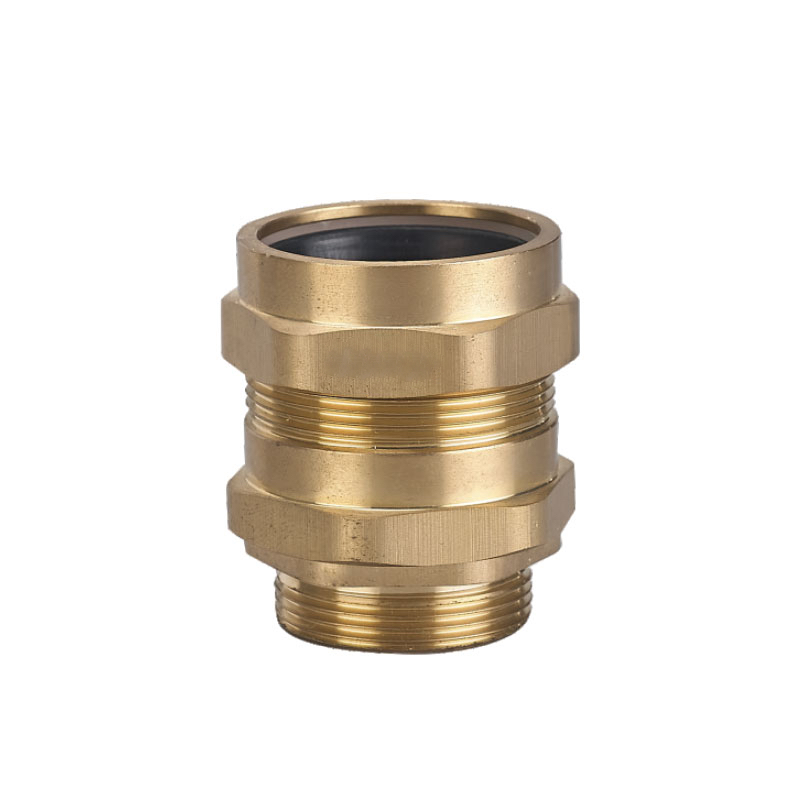
M63 metal glands serve specialized applications involving large-diameter cables that demand superior environmental protection and mechanical strength. High-voltage power cables, large armored cables, multi-core control bundles, and submarine cables typically require M63 metal glands due to their 37-54mm outer diameters and demanding environmental conditions.
High-Voltage Power Cables
Medium Voltage (1kV-35kV):
- Single core: 185mm² to 800mm² conductors
- Three core: 95mm² to 400mm² per core
- XLPE insulation3 with overall diameter 40-52mm
- Require metal glands for EMC shielding and mechanical protection
Industrial Power Distribution:
- 400V/690V systems with large conductor sizes
- Aluminum or copper conductors 240mm² to 1000mm²
- PVC or XLPE insulation with protective sheath
- Typical outer diameter range: 38-50mm
Armored Cable Applications
Steel Wire Armored (SWA) Cables:
- Core sizes: 25mm² to 300mm² per core
- Galvanized steel wire armor: 1.6-3.15mm wire diameter
- Overall diameter including armor: 42-54mm
- Require specialized M63 armored glands with earthing provisions
Aluminum Wire Armored (AWA) Cables:
- Lighter weight alternative to SWA
- Aluminum armor wire: 2.0-4.0mm diameter
- Corrosion resistance in marine environments
- Overall diameter: 40-52mm
Multi-Core Control Cables
Process Control Systems:
- 19-61 core configurations
- Individual core sizes: 1.5-4.0mm²
- Overall screening for EMC protection
- Outer diameter typically 45-55mm
Instrumentation Cables:
- Thermocouple extension cables
- RTD sensor cables
- 4-20mA signal transmission
- Multiple twisted pairs with overall screen
Specialized Cable Types
Submarine Cables:
- Waterproof construction with multiple barriers
- Lead or polymer sheath over armor
- Extreme environmental protection requirements
- Diameter range: 45-60mm
Mining Cables:
- Flame-retardant construction
- Enhanced mechanical protection
- Drag chain and flexible applications
- Reinforced outer sheath construction
Cable Selection Matrix
| Cable Type | Typical Diameter | M63 Gland Type | Special Requirements |
|---|---|---|---|
| HV Power (XLPE) | 40-52mm | Standard M63 | EMC shielding |
| SWA Armored | 42-54mm | Armored M63 | Earthing provision |
| Multi-core Control | 45-55mm | EMC M63 | Signal integrity |
| Submarine | 45-60mm | Marine M63 | Extreme sealing |
| Mining | 38-48mm | Flame-proof M63 | Safety certification |
At Bepto, we maintain extensive cable compatibility databases and work closely with cable manufacturers to ensure our M63 glands accommodate the latest cable designs and specifications.
What Are the Critical Sizing Parameters?
Proper M63 gland sizing involves multiple interdependent parameters that must be carefully balanced to achieve optimal performance. Critical M63 sizing parameters include cable outer diameter range, clamping force distribution, seal compression ratios, thread engagement length, and environmental load factors that collectively determine long-term reliability.
Primary Sizing Parameters
Cable Diameter Range:
- Minimum diameter: 37mm (ensures adequate seal compression)
- Maximum diameter: 54mm (prevents over-compression and damage)
- Optimal range: 42-50mm (maximum sealing effectiveness)
- Tolerance consideration: ±2mm for manufacturing variations
Clamping Force Distribution:
M63 glands must provide uniform clamping pressure around the cable circumference:
- Minimum clamping pressure: 0.8 MPa for IP68 sealing
- Maximum clamping pressure: 2.5 MPa to prevent cable damage
- Pressure uniformity: ±10% variation around circumference
- Compression set resistance: <15% after 1000 hours at maximum temperature
Advanced Sizing Calculations
Seal Compression Ratio:
Optimal seal performance requires precise compression ratios:
- Initial compression: 15-25% of seal cross-section
- Working compression: 20-30% under operating conditions
- Maximum compression: 35% to prevent seal extrusion
- Temperature compensation: Additional 5-10% for thermal expansion
Thread Engagement Analysis:
M63 threads require adequate engagement for mechanical integrity:
- Minimum engagement: 12mm (75% of thread length)
- Optimal engagement: 15-18mm (full thread utilization)
- Panel thickness consideration: 6-25mm accommodation range
- Thread strength: Minimum 80% of bolt tensile strength
Environmental Load Factors
Temperature Cycling Effects:
- Thermal expansion coefficient: 2.3×10⁻⁴ /°C for cable jackets
- Differential expansion: Metal gland vs. cable material
- Cycling stress: ±50°C daily variations in outdoor applications
- Long-term stability: 25-year design life requirement
Vibration and Shock Loads:
- Resonant frequency avoidance: >500Hz for industrial applications
- Acceleration limits: 50G peak for transportation applications
- Fatigue resistance: 10⁷ cycles minimum design life
- Shock absorption: Elastomeric seal damping characteristics
Sizing Verification Methods
Pressure Testing Protocol:
- Initial leak test: 2 bar air pressure for 15 minutes
- Hydrostatic test: 10 bar water pressure for 30 minutes
- Vacuum test: -0.8 bar for moisture ingress verification
- Thermal cycling: -40°C to +100°C with pressure monitoring
Mechanical Load Testing:
- Tensile test: 150% of rated cable weight
- Compression test: 200% of maximum installation force
- Torsion test: ±45° rotation under load
- Fatigue test: 1000 installation/removal cycles
Quality Assurance Parameters
Dimensional Verification:
- Thread pitch accuracy: ±0.05mm tolerance
- Concentricity: <0.1mm total indicator reading
- Surface finish: Ra 1.6μm maximum on sealing surfaces
- Material hardness: Shore A 70±5 for elastomeric seals
I worked with Ahmed, a senior engineer at a petrochemical complex in Abu Dhabi, UAE, who experienced repeated M63 gland failures in high-temperature applications. Through detailed sizing analysis, we discovered the original glands were operating at the edge of their compression limits. Upgrading to glands with extended temperature ratings and optimized seal geometry eliminated the failures completely.
How to Select Between Different M63 Metal Variants?
M63 metal glands come in numerous variants designed for specific applications and environmental conditions. Select M63 metal variants based on material compatibility with the environment, required certifications, cable type compatibility, and specific performance requirements such as EMC shielding, explosion protection, or extreme temperature resistance.

Material Selection Guide
Brass M63 Glands (CW617N + Nickel Plating):
- Best for: General industrial applications
- Temperature range: -40°C to +120°C
- Corrosion resistance: Good in most environments
- Cost: Most economical metal option
- Limitations: Not suitable for marine or highly corrosive environments
Stainless Steel 316L M63 Glands:
- Best for: Marine, chemical, and food processing
- Temperature range: -50°C to +200°C
- Corrosion resistance: Excellent in chloride environments
- Cost: Premium pricing for superior performance
- Benefits: Maintenance-free in harsh conditions
Aluminum M63 Glands (6061-T6):
- Best for: Weight-sensitive applications
- Temperature range: -40°C to +150°C
- Weight: 60% lighter than brass equivalents
- Cost: Moderate pricing
- Applications: Aerospace, transportation, mobile equipment
Specialized Variant Selection
EMC M63 Glands:
Essential for electromagnetic compatibility4 in sensitive installations:
- Shielding effectiveness: >80dB (10MHz-3GHz)
- 360° cable screen termination
- Conductive elastomer seals
- Applications: Data centers, medical equipment, precision instrumentation
ATEX/IECEx M63 Glands:
Required for hazardous area installations:
- Certification: Ex d IIC T6 Gb (typical)
- Temperature class: T1-T6 available
- Gas groups: IIA, IIB, IIC compatibility
- Installation: Requires certified technicians
Marine M63 Glands:
Designed for offshore and shipboard applications:
- DNV-GL type approval
- Enhanced corrosion resistance
- Salt spray testing: 1000+ hours
- Vibration resistance: MIL-STD-167 compliance
Application-Specific Selection Matrix
| Application | Environment | Recommended Variant | Key Features |
|---|---|---|---|
| Power Distribution | Indoor/Standard | Brass M63 | Cost-effective, reliable |
| Chemical Plant | Corrosive | 316L Stainless | Chemical resistance |
| Offshore Platform | Marine | Marine 316L | Salt water resistance |
| Data Center | EMC Sensitive | EMC Brass/SS | Shielding effectiveness |
| Oil Refinery | Hazardous Area | ATEX Stainless | Explosion protection |
| Mobile Equipment | Weight Critical | Aluminum | Lightweight construction |
Performance Comparison
Mechanical Properties:
| Material | Tensile Strength | Yield Strength | Hardness | Weight |
|---|---|---|---|---|
| Brass CW617N | 380 MPa | 180 MPa | 85 HB | 8.5 g/cm³ |
| SS 316L | 580 MPa | 290 MPa | 95 HB | 8.0 g/cm³ |
| Aluminum 6061-T6 | 310 MPa | 275 MPa | 95 HB | 2.7 g/cm³ |
Environmental Resistance:
| Material | Corrosion | UV | Temperature | Chemical |
|---|---|---|---|---|
| Brass | Good | Excellent | Good | Moderate |
| SS 316L | Excellent | Excellent | Excellent | Excellent |
| Aluminum | Good | Excellent | Good | Good |
Selection Decision Tree
Step 1: Environmental Assessment
- Identify corrosive substances present
- Determine temperature extremes
- Assess vibration and shock levels
- Consider maintenance accessibility
Step 2: Regulatory Requirements
- Check hazardous area classifications
- Verify required certifications (ATEX/IECEx5, UL, CSA)
- Confirm EMC compliance needs
- Review industry-specific standards
Step 3: Economic Analysis
- Initial cost vs. lifecycle cost
- Maintenance requirements and frequency
- Replacement availability and lead times
- Total cost of ownership calculation
Step 4: Technical Verification
- Cable compatibility confirmation
- Installation space requirements
- Tool and equipment availability
- Technician skill level requirements
Bepto’s Selection Support Services
Our technical team provides comprehensive selection assistance:
- Application questionnaire for requirement gathering
- Environmental assessment and material recommendation
- 3D modeling services for complex installations
- Prototype programs for validation testing
- Certification package preparation and submission
Conclusion
Proper sizing and selection of M63 metal cable glands is critical for large cable installations requiring maximum reliability and environmental protection. Understanding the relationship between cable diameter, environmental conditions, material properties, and application requirements ensures optimal gland performance and long-term system integrity. Whether you’re dealing with high-voltage power cables, armored installations, or specialized marine applications, careful attention to sizing parameters and variant selection will prevent costly failures and ensure compliance with industry standards. At Bepto, we combine decades of experience with advanced manufacturing capabilities to deliver M63 solutions that meet the most demanding industrial requirements. 😉
FAQs About M63 Metal Cable Gland Sizing
Q: What cable diameter range do M63 metal glands accommodate?
A: M63 metal cable glands accommodate cable outer diameters from 37mm to 54mm, with optimal sealing performance in the 42-50mm range. Always measure your cable at multiple points to account for diameter variations.
Q: How much torque is required to install M63 metal glands?
A: M63 metal glands require 150-200 Nm installation torque, significantly higher than smaller glands. Use a calibrated torque wrench and ensure adequate access space for proper installation tools.
Q: Can M63 glands handle armored cables?
A: Yes, specialized M63 armored cable glands are designed for SWA/AWA cables with outer diameters up to 54mm including armor. These provide proper armor termination and earthing provisions for safety compliance.
Q: What’s the difference between brass and stainless steel M63 glands?
A: Stainless steel M63 glands offer superior corrosion resistance and higher temperature ratings (-50°C to +200°C vs -40°C to +120°C for brass), but cost 40-60% more. Choose stainless steel for marine, chemical, or extreme environment applications.
Q: How do I verify proper seal compression in M63 glands?
A: Proper seal compression is achieved when the gland body threads engage fully (15-18mm) and the cable shows slight deformation without damage. Perform pressure testing at 2 bar air pressure to verify IP68 sealing integrity.
-
Understand the Ingress Protection (IP) rating system to ensure your equipment is properly sealed against dust and water. ↩
-
Review the material properties of CW617N brass to understand why it is the standard for high-quality industrial fittings. ↩
-
Learn about Cross-Linked Polyethylene (XLPE) insulation and its advantages in high-voltage and high-temperature cable applications. ↩
-
Explore the concept of Electromagnetic Compatibility (EMC) to understand the importance of shielding in sensitive electronic environments. ↩
-
Compare ATEX and IECEx standards to understand the safety requirements for equipment used in explosive atmospheres. ↩