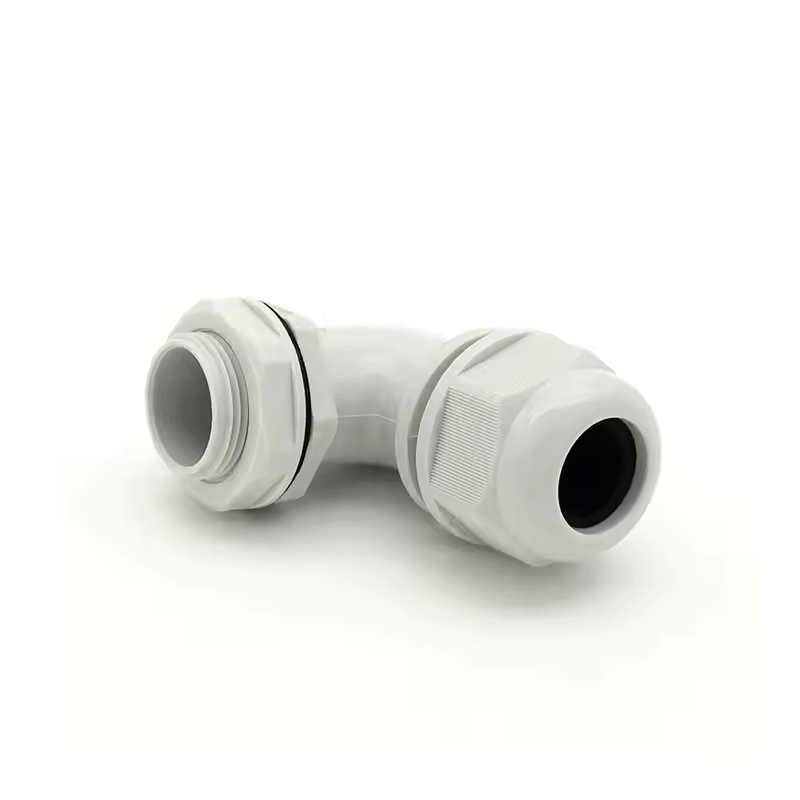
Space constraints in modern electrical installations are becoming increasingly challenging. Traditional straight cable glands often require excessive clearance, forcing engineers to compromise on design or accept suboptimal cable routing solutions.
Right-angle cable glands provide a 90-degree cable exit that reduces space requirements by up to 70% compared to straight glands while maintaining full IP protection1 and strain relief2. These specialized connectors are essential for compact control panels, junction boxes, and equipment housings where every millimeter counts.
Last week, I received an urgent call from Marcus, a panel builder in Munich who was struggling with a pharmaceutical equipment project. His control panel design required 24 cable entries in a space barely 300mm wide. Traditional straight glands would have needed 450mm clearance – space he simply didn’t have. The project was at risk of complete redesign until we introduced him to our right-angle cable gland solutions 😉
Table of Contents
- What Are Right-Angle Cable Glands?
- Why Choose Right-Angle Cable Glands for Tight Spaces?
- What Types of Right-Angle Cable Glands Are Available?
- How to Select the Right Right-Angle Cable Gland?
- What Are Common Installation Challenges and Solutions?
- FAQs About Right-Angle Cable Glands
What Are Right-Angle Cable Glands?
Right-angle cable glands represent a breakthrough in space-efficient cable management, but many engineers still don’t fully understand their capabilities.
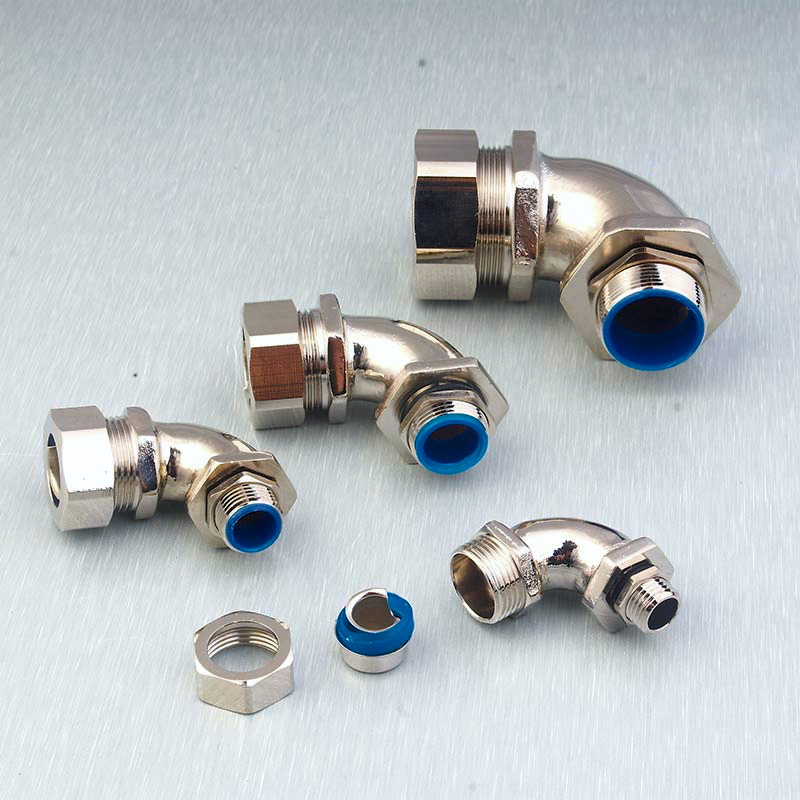
Right-angle cable glands are specialized connectors that redirect cable exit direction by 90 degrees, allowing cables to run parallel to the mounting surface instead of perpendicular. This design dramatically reduces the space envelope required for cable connections while maintaining all standard gland functions including sealing, strain relief, and environmental protection.
Key Design Features
The engineering behind right-angle cable glands involves several critical components:
- Internal cable guide: Smooth radius bend prevents cable damage during routing
- Dual sealing system: Primary seal at cable entry, secondary seal at bend point
- Strain relief mechanism: Distributes mechanical stress across the cable bend
- Compact housing: Minimized external dimensions for maximum space savings
Material Options and Applications
| Material Type | Typical Applications | Key Benefits |
|---|---|---|
| Nylon (PA66) | Control panels, junction boxes | Cost-effective, chemical resistant |
| Brass (Nickel-plated) | Industrial equipment, marine | EMC shielding3, corrosion resistance |
| Stainless Steel 316L | Food processing, pharmaceuticals | Hygienic, extreme corrosion resistance |
| Aluminum | Aerospace, automotive | Lightweight, good EMC properties |
At Bepto, we manufacture right-angle cable glands in all these materials using precision CNC machining and injection molding. Our ISO9001 and IATF16949 certifications ensure consistent quality across all product variants.
Why Choose Right-Angle Cable Glands for Tight Spaces?
Space optimization is just the beginning – right-angle cable glands offer multiple advantages that traditional straight glands simply cannot match.
Right-angle cable glands reduce installation space requirements by 60-70%, improve cable management aesthetics, and enable more compact equipment designs. They also provide better protection against accidental cable damage in high-traffic areas.
Space Savings Analysis
Consider a typical control panel installation:
- Straight gland requirement: Cable diameter + 150mm minimum bend radius[^4] + 50mm clearance = ~220mm total depth
- Right-angle gland requirement: Gland height (typically 35-45mm) + 20mm clearance = ~65mm total depth
- Space savings: Approximately 155mm (70% reduction)
Real-World Impact: Marcus’s Success Story
Remember Marcus from Munich? Here’s how right-angle cable glands solved his pharmaceutical equipment challenge:
Original Design Issues:
- 24 cable entries required in 300mm panel width
- Straight glands needed 450mm clearance
- Project facing complete redesign and 6-week delay
Right-Angle Solution:
- Reduced clearance requirement to 180mm
- Maintained all IP65 sealing requirements
- Achieved cleaner cable routing aesthetics
- Project completed on schedule with 15% cost savings
Marcus later told me: “These right-angle glands didn’t just solve our space problem – they improved the entire design. Our client was so impressed they specified them for three additional projects.”
Additional Benefits
Beyond space savings, right-angle cable glands provide:
- Improved cable protection: Reduced exposure to mechanical damage
- Enhanced aesthetics: Cleaner, more professional appearance
- Better accessibility: Easier maintenance and cable replacement
- Reduced installation time: Simplified cable routing reduces labor costs
What Types of Right-Angle Cable Glands Are Available?
The right-angle cable gland market offers numerous variants designed for specific applications and environmental conditions.
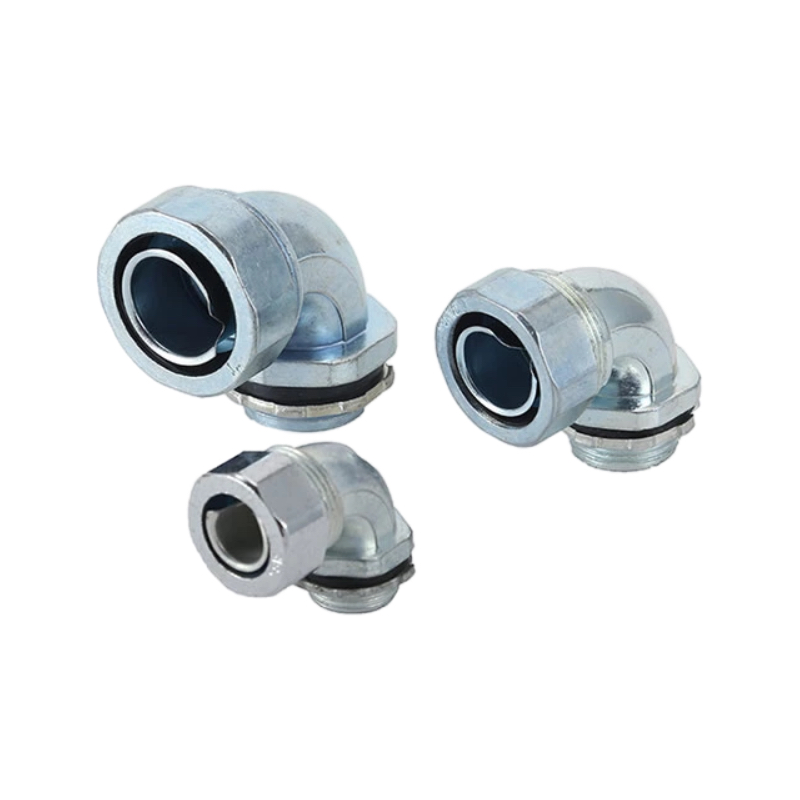
Right-angle cable glands are available in fixed 90-degree, adjustable angle, and swivel configurations, with thread sizes from M12 to M63 and cable ranges from 3mm to 44mm diameter. Material options include nylon, brass, stainless steel, and specialized compounds for extreme environments.
Configuration Types
Fixed 90-Degree Glands
- Applications: Standard panel installations, junction boxes
- Advantages: Lowest cost, highest reliability, compact design
- Limitations: Single exit direction only
Adjustable Angle Glands
- Applications: Complex routing requirements, retrofit installations
- Advantages: 0-90 degree adjustment range, installation flexibility
- Limitations: Higher cost, larger housing size
Swivel Right-Angle Glands
- Applications: Moving equipment, vibration-prone environments
- Advantages: 360-degree rotation capability, dynamic applications
- Limitations: Most expensive option, requires periodic maintenance
Thread and Size Options
| Thread Type | Size Range | Cable Diameter Range | Typical Applications |
|---|---|---|---|
| Metric (M) | M12 – M63 | 3mm – 44mm | European equipment, industrial |
| NPT | 1/4″ – 2″ | 6mm – 38mm | North American installations |
| PG | PG7 – PG48 | 3mm – 40mm | German standard equipment |
| G (BSP) | G1/4 – G2 | 6mm – 38mm | British/Commonwealth markets |
Environmental Ratings
Right-angle cable glands are available with various protection levels:
- IP54: Basic dust and splash protection
- IP65: Complete dust protection, water jet resistance
- IP66: Enhanced water jet protection
- IP67: Temporary immersion protection
- IP68: Continuous submersion capability (up to specified depth)
How to Select the Right Right-Angle Cable Gland?
Proper selection requires careful consideration of multiple factors beyond just space constraints.
Select right-angle cable glands based on cable diameter, thread size, environmental requirements, material compatibility, and installation constraints. Always verify that the gland’s bend radius exceeds your cable’s minimum bend radius specification.
Step-by-Step Selection Process
Step 1: Cable Analysis
- Measure actual cable outer diameter (not nominal)
- Verify cable minimum bend radius requirements
- Check cable sheath material compatibility
- Confirm cable temperature rating
Step 2: Environmental Assessment
- Determine required IP protection level
- Identify chemical exposure risks
- Assess temperature range requirements
- Consider UV exposure and weathering needs
Step 3: Mechanical Requirements
- Calculate expected cable pull forces
- Assess vibration and shock conditions
- Determine mounting panel thickness
- Verify thread engagement requirements
Step 4: Regulatory Compliance
- Check applicable safety standards (UL, CE, ATEX4)
- Verify material certifications (RoHS, REACH)
- Confirm industry-specific requirements (FDA, 3A Sanitary)
Common Selection Mistakes to Avoid
Based on my experience helping customers worldwide, here are the most frequent selection errors:
- Ignoring cable bend radius: Choosing glands with tighter bends than cable specifications allow
- Underestimating environmental exposure: Selecting inadequate IP ratings for the application
- Material incompatibility: Using glands with seals incompatible with cable sheath materials
- Thread mismatch: Ordering metric threads for NPT applications (or vice versa)
- Insufficient strain relief: Selecting glands too small to provide adequate cable grip
What Are Common Installation Challenges and Solutions?
Even the best right-angle cable glands can fail if not properly installed – here’s how to avoid common pitfalls.
The most common installation challenges include achieving proper seal compression, managing cable bend stress, ensuring adequate thread engagement, and maintaining IP ratings during assembly. Proper preparation and technique are essential for reliable long-term performance.
Challenge #1: Seal Compression Issues
Problem: Inadequate or excessive seal compression leading to leakage or cable damage
**Solution:**Example
- Use calibrated torque wrench for consistent compression
- Follow manufacturer’s torque specifications exactly
- Verify seal material compatibility with cable sheath
- Inspect seals for damage before installation
Challenge #2: Cable Bend Stress Management
Problem: Excessive stress at the bend point causing cable failure
Solution:
- Verify cable bend radius compliance before installation
- Use proper cable support within 300mm of gland exit
- Avoid sharp edges or stress concentrators near bend area
- Consider strain relief boots for high-flex applications
Challenge #3: Thread Engagement Problems
Problem: Insufficient thread engagement compromising mechanical strength
Solution:
- Ensure minimum 5 full thread engagement
- Use appropriate thread sealant for environmental conditions
- Verify panel thickness compatibility with gland design
- Check for thread damage before installation
Real-World Case Study: Offshore Platform Success
Ahmed, an electrical supervisor at an offshore oil platform in the Persian Gulf, faced a unique challenge. His team needed to install 18 right-angle cable glands in a control room with severe space constraints and harsh marine conditions.
Initial Challenges:
- Limited 200mm clearance behind control panels
- Saltwater spray and high humidity environment
- Vibration from nearby machinery
- 24/7 operation requirements (no downtime for repairs)
Our Solution:
- Specified marine-grade stainless steel 316L right-angle glands
- Provided detailed installation procedures and torque specifications
- Recommended silicone-based thread sealant for marine conditions
- Supplied spare sealing elements for preventive maintenance
Results:
- All 18 glands installed successfully within 4-hour maintenance window
- Zero leakage issues after 18 months of operation
- 40% space savings enabled additional equipment installation
- Client ordered 50 additional units for platform expansion
Installation Best Practices
- Pre-installation inspection: Check all components for damage or contamination
- Proper preparation: Clean threads and sealing surfaces thoroughly
- Correct assembly sequence: Follow manufacturer’s step-by-step procedures
- Torque control: Use calibrated tools and specified values
- Post-installation testing: Verify IP ratings and mechanical integrity
Conclusion
Right-angle cable glands are game-changers for space-constrained installations, offering 60-70% space savings while maintaining full environmental protection and strain relief capabilities. Success depends on proper selection based on cable requirements, environmental conditions, and installation constraints. At Bepto, we’re committed to providing high-quality right-angle solutions with comprehensive technical support to ensure your project success. Whether you’re dealing with compact control panels, tight junction boxes, or complex equipment housings, the right right-angle cable gland can transform your design possibilities.
FAQs About Right-Angle Cable Glands
Q: Can right-angle cable glands handle the same IP ratings as straight glands?
A: Yes, quality right-angle cable glands achieve the same IP ratings as straight glands, including IP68 for continuous submersion. The dual sealing system actually provides enhanced protection at the critical bend point.
Q: What’s the minimum cable bend radius for right-angle cable glands?
A: Most right-angle cable glands accommodate cables with minimum bend radius of 6-8 times the cable diameter. Always verify your specific cable’s bend radius requirements before selection to prevent damage.
Q: Are right-angle cable glands more expensive than straight glands?
A: Right-angle cable glands typically cost 20-40% more than equivalent straight glands, but the space savings often reduce overall installation costs through smaller enclosures and simplified cable management.
Q: Can I retrofit existing installations with right-angle cable glands?
A: Yes, right-angle cable glands can often retrofit existing installations using the same thread size. However, verify clearance requirements and cable bend radius compatibility before proceeding.
Q: Do right-angle cable glands require special maintenance?
A: Right-angle cable glands require the same maintenance as straight glands – periodic inspection of seals and thread connections. The bend area should be checked for cable stress or damage during routine maintenance.
-
Learn about the Ingress Protection (IP) rating system and what the digits signify for sealing against solids and liquids. ↩
-
Understand the importance of strain relief in preventing cable damage and ensuring connection integrity under mechanical stress. ↩
-
Explore the principles of Electromagnetic Compatibility (EMC) shielding and how it protects signals from interference.
[^]: Learn the definition of minimum bend radius and why respecting this limit is critical for cable health and performance. ↩ -
Discover the requirements of the ATEX directive for equipment used in potentially explosive atmospheres. ↩