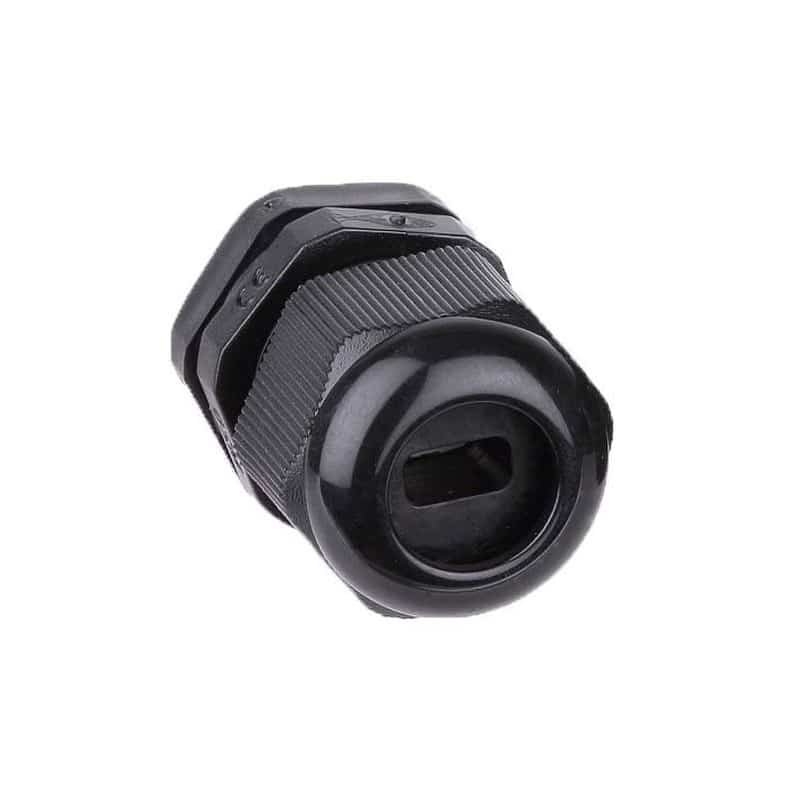
Non-circular cables create unique sealing challenges that standard round cable glands simply cannot address, leading to IP rating failures, moisture ingress, and costly equipment damage in critical applications. Gland sealing for cables with non-circular cross-sections requires specialized sealing inserts, custom gaskets, or adaptable gland designs that accommodate flat, oval, rectangular, and irregular cable shapes while maintaining environmental protection ratings through proper compression distribution and material selection. Just last month, Michael Thompson, the project manager for a major wind farm installation in Texas, contacted me in frustration. His team had spent three days trying to seal flat solar DC cables using standard round glands, only to discover water ingress during the first rain test. The IP65 rating failure would have delayed the entire project by weeks and cost over $50,000 in rework. Fortunately, our specialized flat cable glands with custom sealing inserts solved the problem in hours, maintaining perfect environmental protection while meeting all safety requirements. 😉
Table of Contents
- What Are Non-Circular Cable Cross-Sections and Why Do They Need Special Sealing?
- How Do Specialized Sealing Solutions Work for Different Cable Shapes?
- What Are the Key Design Considerations for Non-Circular Cable Glands?
- How Do You Select the Right Sealing Method for Your Application?
- What Installation Best Practices Ensure Reliable Sealing Performance?
- FAQs About Non-Circular Cable Sealing
What Are Non-Circular Cable Cross-Sections and Why Do They Need Special Sealing?
Understanding the unique challenges posed by non-circular cables is essential for selecting appropriate sealing solutions that maintain environmental protection and system reliability.
Non-circular cable cross-sections include flat, oval, rectangular, and irregular shapes commonly found in solar DC cables, ribbon cables, specialty data cables, and custom industrial applications that require specialized sealing approaches because standard round glands create uneven compression, air gaps, and seal deformation that compromise IP ratings and allow moisture ingress.
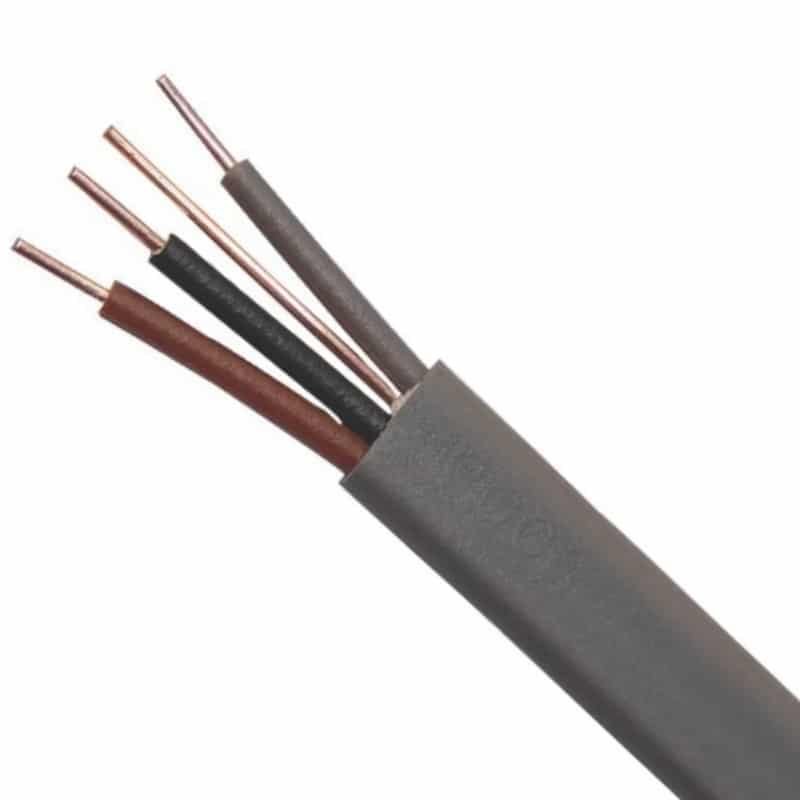
Common Non-Circular Cable Types
Flat Solar Cables: Photovoltaic DC cables feature flattened cross-sections to minimize wind resistance and facilitate panel mounting. These cables typically measure 6-8mm thick by 12-15mm wide, creating significant sealing challenges when entering junction boxes or inverter enclosures.
Ribbon Cables: Multi-conductor flat cables used in data transmission and control applications present rectangular cross-sections that vary widely in dimensions. Standard sealing methods fail to accommodate the extreme aspect ratios common in these applications.
Oval Data Cables: High-speed communication cables often use oval cross-sections to optimize signal integrity while reducing space requirements. The elongated shape requires specialized sealing inserts to prevent environmental contamination.
Custom Industrial Cables: Specialized applications may require unique cable shapes for specific performance characteristics, thermal management, or space constraints that demand custom sealing solutions.
Sealing Challenges
Uneven Compression Distribution: Round glands apply uniform radial compression that works perfectly for circular cables but creates high-stress points and gaps when used with non-circular shapes. This uneven pressure can damage cable jackets or fail to achieve proper sealing.
Air Gap Formation: The mismatch between round gland openings and non-circular cables creates air paths that allow moisture, dust, and contaminants to bypass the sealing system, compromising IP ratings and potentially causing equipment failure.
Seal Material Deformation: Standard elastomeric seals designed for round cables may extrude, tear, or fail to conform properly to irregular shapes, leading to premature seal failure and environmental protection loss.
Installation Difficulties: Forcing non-circular cables through round glands often requires excessive installation force that can damage conductors, insulation, or the cable jacket, creating safety hazards and performance issues.
Industry Applications
Solar Power Systems: Flat DC cables connecting photovoltaic panels to combiner boxes and inverters require reliable sealing to prevent moisture ingress that could cause arc faults1, ground faults, or system failures in outdoor installations.
Data Centers: High-density ribbon cables and specialty data cables need proper environmental sealing to maintain signal integrity and prevent contamination in critical communication infrastructure.
Industrial Automation: Custom cable shapes used in robotics, manufacturing equipment, and process control systems require specialized sealing to maintain operational reliability in harsh industrial environments.
How Do Specialized Sealing Solutions Work for Different Cable Shapes?
Different non-circular cable configurations require specific sealing approaches and technologies to achieve reliable environmental protection and long-term performance.
Specialized sealing solutions use custom-molded inserts, adaptable gasket systems, split-seal designs, and multi-piece gland constructions that conform to specific cable shapes through precise material selection, compression control, and geometric optimization to maintain IP ratings while accommodating thermal expansion, mechanical stress, and environmental exposure.
Custom Sealing Insert Technology
Molded Elastomeric Inserts: Purpose-designed sealing inserts manufactured from NBR, EPDM2, or silicone rubber feature internal cavities that precisely match cable cross-sections. These inserts distribute compression evenly around the entire cable perimeter, eliminating air gaps and ensuring consistent sealing pressure.
Multi-Durometer Construction: Advanced inserts combine different rubber hardnesses in a single component – softer materials for intimate cable contact and harder materials for structural support and compression resistance. This approach optimizes both sealing performance and mechanical durability.
Chemical Compatibility: Insert materials are selected based on cable jacket chemistry, environmental exposure, and temperature requirements. EPDM provides excellent ozone and weather resistance for outdoor applications, while FKM offers superior chemical resistance for industrial environments.
Adaptable Gland Designs
Split-Body Construction: Glands featuring separable halves allow easy cable insertion and provide access for custom sealing arrangements. The split design accommodates cables that cannot be threaded through traditional glands due to connectors or other attachments.
Adjustable Compression Systems: Variable compression mechanisms allow fine-tuning of sealing pressure to optimize performance for specific cable shapes and materials. This adjustability prevents over-compression that could damage cables or under-compression that compromises sealing.
Modular Sealing Elements: Interchangeable sealing components enable field customization for different cable types without requiring complete gland replacement. This modularity reduces inventory requirements and installation complexity.
Advanced Sealing Technologies
Gel-Filled Sealing: Specialized sealing compounds that remain fluid during installation but cure to form custom-shaped seals around irregular cables. This technology provides excellent conformity to complex shapes while maintaining long-term flexibility and environmental resistance.
Mechanical Compression Systems: Precision-engineered compression mechanisms that apply controlled pressure to deformable sealing elements, ensuring optimal sealing force distribution regardless of cable shape variations.
Hybrid Sealing Approaches: Combined mechanical and chemical sealing systems that use both physical compression and sealant materials to achieve superior environmental protection for challenging cable configurations.
What Are the Key Design Considerations for Non-Circular Cable Glands?
Successful non-circular cable gland design requires careful attention to multiple engineering factors that affect both sealing performance and practical installation requirements.
Key design considerations include accurate cable dimension measurement and tolerance analysis, appropriate sealing material selection for environmental conditions, compression force calculation and distribution optimization, thermal expansion accommodation, mechanical stress management, IP rating verification testing, and long-term aging performance validation to ensure reliable sealing throughout the expected service life.
Dimensional Analysis and Tolerance Management
Precise Cable Measurement: Accurate measurement of cable cross-sectional dimensions, including manufacturing tolerances, is critical for proper sealing design. Variations in cable width, thickness, and overall perimeter must be accommodated within the sealing system design envelope.
Tolerance Stack-Up Analysis: Understanding how manufacturing tolerances in both cables and glands combine to affect sealing performance helps optimize design margins and prevent field failures due to dimensional variations.
Shape Factor Considerations: The relationship between cable perimeter and cross-sectional area affects sealing pressure requirements and material selection. High aspect ratio shapes require special attention to prevent seal extrusion or inadequate compression.
Material Selection Criteria
Environmental Compatibility: Sealing materials must withstand the specific environmental conditions including temperature extremes, UV exposure, ozone, chemicals, and moisture without degradation that could compromise sealing performance.
Cable Jacket Compatibility: Chemical compatibility between sealing materials and cable jackets prevents plasticizer migration3, swelling, or degradation that could affect both sealing and cable performance over time.
Mechanical Properties: Sealing materials require appropriate hardness, compression set resistance, and tear strength to maintain sealing integrity under installation stresses and operational loads.
Compression System Design
Force Distribution Analysis: Finite element analysis4 helps optimize compression system geometry to ensure uniform pressure distribution around non-circular cable perimeters, preventing high-stress concentrations that could damage cables or seals.
Spring Rate Matching: Compression system spring rates must match sealing material characteristics to maintain optimal sealing pressure throughout temperature cycles and long-term material relaxation.
Installation Force Limits: Compression systems must provide adequate sealing force while remaining within practical installation torque limits to prevent field installation problems or cable damage.
Customer Success Story
Last year, Yuki Tanaka, the chief engineer at a major electronics manufacturer in Osaka, Japan, was struggling with sealing flat ribbon cables in their automated assembly equipment. Standard round glands were causing cable damage during installation and failing to maintain IP54 ratings in their dusty production environment. We developed a custom split-gland design with precision-molded sealing inserts that perfectly matched their 15mm x 3mm ribbon cables. The new design reduced installation time by 60%, eliminated cable damage, and achieved IP65 rating with zero failures in over 10,000 installations. The modular design also allowed them to use the same gland body for three different ribbon cable sizes, significantly reducing their inventory costs and simplifying maintenance procedures.
Performance Validation Requirements
IP Rating Testing: Comprehensive testing to verify environmental protection ratings under various conditions including temperature cycling, pressure differentials, and long-term exposure to ensure reliable field performance.
Mechanical Testing: Validation of cable retention strength, compression set resistance, and fatigue performance under realistic installation and operational conditions.
Accelerated Aging: Testing to predict long-term sealing performance under accelerated environmental conditions that simulate years of field exposure in compressed timeframes.
How Do You Select the Right Sealing Method for Your Application?
Choosing the optimal sealing approach for non-circular cables requires systematic evaluation of application requirements, environmental conditions, and performance criteria.
Select sealing methods based on cable cross-sectional geometry and dimensional tolerances, environmental protection requirements and IP rating needs, installation constraints and accessibility limitations, maintenance requirements and service life expectations, cost considerations including initial and lifecycle costs, and regulatory compliance requirements for specific industries or applications.
Application Assessment Framework
Cable Characterization: Document exact cable dimensions, cross-sectional shape, jacket material, temperature rating, and flexibility requirements. Include manufacturing tolerances and any dimensional changes expected during service life.
Environmental Analysis: Identify all environmental factors including temperature range, humidity, chemical exposure, UV radiation, mechanical vibration, and pressure differentials that could affect sealing performance.
Performance Requirements: Define specific IP rating needs, expected service life, maintenance intervals, and failure consequences to establish appropriate design margins and material selection criteria.
Sealing Method Comparison
| Sealing Method | Best Applications | Advantages | Limitations |
|---|---|---|---|
| Custom Inserts | Standard shapes, high volume | Optimal fit, reliable performance | Higher tooling costs |
| Split Glands | Complex installations, maintenance access | Easy installation, field serviceable | Higher cost, more components |
| Gel Sealing | Irregular shapes, prototype applications | Excellent conformity, versatile | Limited chemical resistance |
| Mechanical Compression | High-stress environments | Robust, adjustable | Complex installation |
Selection Decision Matrix
Volume Considerations: High-volume applications justify custom tooling costs for molded sealing inserts, while low-volume or prototype applications benefit from adaptable solutions like gel sealing or adjustable compression systems.
Installation Environment: Field installation conditions affect sealing method selection – confined spaces may require split glands, while clean environments allow more complex installation procedures.
Maintenance Philosophy: Applications requiring field serviceability benefit from modular designs with replaceable sealing elements, while permanent installations can use more integrated approaches.
Cost-Benefit Analysis
Initial Costs: Compare upfront costs including gland purchase price, custom tooling, and installation labor requirements across different sealing approaches to identify the most cost-effective solution.
Lifecycle Costs: Consider long-term costs including maintenance, replacement, and failure consequences to optimize total cost of ownership over the expected service life.
Risk Assessment: Evaluate failure consequences and probability to determine appropriate investment levels in sealing system reliability and redundancy.
What Installation Best Practices Ensure Reliable Sealing Performance?
Proper installation techniques are crucial for achieving optimal sealing performance and long-term reliability with non-circular cable glands.
Installation best practices include thorough cable preparation with proper stripping and cleaning, correct sealing insert orientation and positioning, appropriate compression torque application using calibrated tools, comprehensive sealing verification through pressure testing, proper strain relief provision, and detailed documentation of installation parameters for future maintenance and troubleshooting activities.
Cable Preparation Procedures
Surface Cleaning: Remove all dirt, oils, and contaminants from cable surfaces that will contact sealing elements. Use appropriate solvents that won’t damage cable jackets or leave residues that could affect sealing performance.
Dimensional Verification: Measure actual cable dimensions at the sealing location to verify compatibility with selected gland and sealing insert specifications. Account for any cable deformation or dimensional changes during installation.
Jacket Inspection: Examine cable jackets for damage, nicks, or irregularities that could compromise sealing integrity. Minor surface imperfections may require sealing compound application or jacket repair before installation.
Sealing System Assembly
Insert Orientation: Ensure proper orientation of custom sealing inserts relative to cable cross-sectional shape. Incorrect orientation can create air gaps or uneven compression that compromises environmental protection.
Compression Sequence: Follow manufacturer-specified torque sequences for multi-component glands to ensure proper sealing element positioning and compression distribution throughout the assembly process.
Lubrication Guidelines: Use only approved lubricants that are compatible with both sealing materials and cable jackets. Improper lubricants can cause seal swelling, degradation, or loss of sealing effectiveness.
Installation Verification
Torque Verification: Use calibrated torque tools to apply manufacturer-specified compression forces. Over-tightening can damage cables or seals, while under-tightening allows leakage and environmental contamination.
Pressure Testing: Perform appropriate pressure tests to verify IP rating achievement before system commissioning. Test methods should match the intended service environment and exposure conditions.
Visual Inspection: Check for proper seal positioning, absence of gaps or extrusion, and correct cable alignment within the gland assembly. Document any deviations from standard installation appearance.
Quality Assurance Procedures
Installation Documentation: Record installation parameters including torque values, test results, and any deviations from standard procedures to support warranty claims and future maintenance activities.
Performance Monitoring: Establish baseline measurements for future comparison during routine maintenance inspections to identify degradation trends before failures occur.
Preventive Maintenance: Develop inspection schedules and replacement criteria based on environmental exposure and manufacturer recommendations to maintain reliable sealing performance throughout service life.
Conclusion
Sealing non-circular cables presents unique challenges that require specialized solutions and careful attention to design, material selection, and installation practices. The key to success lies in understanding the specific requirements of each cable shape and application, then selecting appropriate sealing technologies that provide reliable environmental protection throughout the expected service life. At Bepto, we’ve developed comprehensive solutions for flat, oval, rectangular, and custom cable shapes through our advanced manufacturing capabilities and extensive testing programs. Our precision CNC machining enables custom sealing insert production, while our injection molding facilities provide cost-effective solutions for higher volume applications. With full ATEX, UL, and IP68 certifications, our non-circular cable glands meet the demanding requirements of solar, industrial, and data center applications worldwide. Whether you’re dealing with flat solar cables, ribbon data cables, or custom industrial shapes, our engineering team can develop optimized sealing solutions that ensure reliable performance and regulatory compliance. The investment in proper sealing technology pays dividends through reduced maintenance costs, improved system reliability, and elimination of costly environmental protection failures. 😉
FAQs About Non-Circular Cable Sealing
Q: Can I use standard round cable glands for flat cables if I compress them enough?
A: No, forcing flat cables through round glands creates uneven compression that can damage the cable and fails to achieve proper sealing. Standard glands create air gaps and stress concentrations that compromise both IP ratings and cable integrity, requiring specialized sealing solutions.
Q: What’s the difference between custom sealing inserts and split glands for non-circular cables?
A: Custom sealing inserts provide optimal fit and performance for specific cable shapes but require tooling investment, while split glands offer installation flexibility and field serviceability at higher component costs. Choose based on volume, installation constraints, and maintenance requirements.
Q: How do I measure non-circular cables correctly for gland selection?
A: Measure the maximum width, thickness, and perimeter at the sealing location using precision calipers. Include manufacturing tolerances and any dimensional changes expected during service. Provide these measurements to gland manufacturers for proper sealing system design.
Q: Are gel-filled sealing systems reliable for long-term outdoor applications?
A: Quality gel sealing systems provide excellent conformity to irregular shapes and can offer good long-term performance when properly formulated for environmental exposure. However, they may have limitations in extreme chemical environments compared to mechanical sealing systems with engineered elastomers.
Q: What IP ratings can be achieved with non-circular cable sealing systems?
A: Properly designed non-circular cable glands can achieve IP ratings up to IP68 when using appropriate sealing technologies and installation practices. The achievable rating depends on cable shape, sealing method, and environmental requirements rather than being limited by the non-circular geometry.
-
[Learn about the causes and dangers of arc faults, a serious electrical safety hazard.] ↩
-
[Explore the technical properties, temperature range, and common uses of EPDM synthetic rubber.] ↩
-
[Understand the chemical process of plasticizer migration and how it can cause materials to become brittle.] ↩
-
[Read a definition of Finite Element Analysis (FEA), a powerful computer simulation method used in engineering.] ↩