Introduction
Ever wondered why some cable installations fail prematurely in humid environments while others last decades? The answer often lies in something invisible yet critical: water vapor transmission through gland seals. As someone who’s spent over 10 years in the cable gland industry, I’ve seen countless projects where improper vapor barrier selection led to catastrophic equipment failure and millions in damages.
Water vapor transmission rate (WVTR)1 through gland seals varies dramatically based on material composition, seal design, and environmental conditions, with silicone seals showing 10-100 times higher transmission rates than EPDM or Viton alternatives. Understanding these differences is crucial for selecting the right protection level for your specific application.
Just last month, David from a major automotive manufacturer in Detroit called me in panic. Their outdoor junction boxes were failing after just 18 months due to internal condensation damage. The culprit? High WVTR seals that allowed moisture accumulation despite appearing “waterproof” during initial IP68 testing2. This scenario plays out more often than you’d think! 😟
Table of Contents
- What Is Water Vapor Transmission Rate in Cable Glands?
- How Do Different Seal Materials Compare?
- What Factors Affect WVTR Performance?
- How to Select the Right Seal for Your Application?
- What Are the Long-term Cost Implications?
- FAQ
What Is Water Vapor Transmission Rate in Cable Glands?
Water vapor transmission rate measures how much moisture passes through a seal material over time, typically expressed in grams per square meter per 24 hours (g/m²/24h). Unlike liquid water ingress that IP ratings address, WVTR focuses on molecular-level moisture migration that can cause long-term damage through condensation, corrosion, and insulation degradation.

Understanding the Science Behind WVTR
Water vapor molecules are incredibly small – about 2.8 angstroms in diameter. They can penetrate polymer chains through several mechanisms:
- Solution-diffusion: Molecules dissolve into the polymer matrix and diffuse through
- Pore transport: Migration through microscopic voids in the material
- Permeation: Direct passage through molecular gaps
At Bepto, we test all our cable gland seals using ASTM E963 and ISO 15106 standards to ensure consistent performance data. The testing involves controlled temperature and humidity gradients across seal samples, measuring moisture transmission over extended periods.
Different applications require different WVTR thresholds. For instance, our marine-grade stainless steel cable glands use specialized EPDM seals with WVTR values below 0.1 g/m²/24h, while standard industrial applications might accept values up to 5 g/m²/24h depending on the environment.
How Do Different Seal Materials Compare?
The material composition dramatically affects vapor transmission rates. Here’s a comprehensive comparison based on our extensive testing at Bepto’s quality lab:
| Seal Material | WVTR (g/m²/24h) | Temperature Range | Chemical Resistance | Cost Factor |
|---|---|---|---|---|
| EPDM | 0.05-0.3 | -40°C to +150°C | Excellent | 1.0x |
| Viton (FKM)4 | 0.02-0.15 | -20°C to +200°C | Superior | 3.5x |
| Nitrile (NBR) | 0.8-2.5 | -30°C to +120°C | Good | 0.8x |
| Silicone | 15-45 | -60°C to +200°C | Fair | 1.2x |
| Neoprene | 2-8 | -40°C to +100°C | Good | 1.1x |

Real-World Performance Stories
Hassan, who runs a petrochemical facility in Saudi Arabia, initially chose silicone seals for their temperature resistance. However, after experiencing repeated control system failures due to moisture ingress, we switched his installation to our Viton-sealed explosion-proof cable glands. The WVTR reduction from 25 g/m²/24h to 0.08 g/m²/24h eliminated his moisture problems completely.
EPDM emerges as the sweet spot for most applications – offering excellent vapor barrier properties at reasonable cost. Our proprietary EPDM compound, developed specifically for harsh marine environments, consistently achieves WVTR values below 0.1 g/m²/24h while maintaining flexibility across extreme temperature ranges.
Viton provides the ultimate performance but comes at a premium. We typically recommend it for critical applications where failure isn’t an option – think nuclear facilities, aerospace, or high-value pharmaceutical manufacturing.
What Factors Affect WVTR Performance?
Environmental and design factors significantly influence actual vapor transmission rates in field conditions. Understanding these variables helps predict real-world performance beyond laboratory testing.
Temperature Impact
Temperature affects WVTR exponentially, not linearly. For every 10°C increase, most elastomer seals show 2-3x higher transmission rates. This is why our Arctic-rated cable glands perform so much better in cold climates – the reduced molecular activity dramatically slows vapor migration.
Humidity Differential
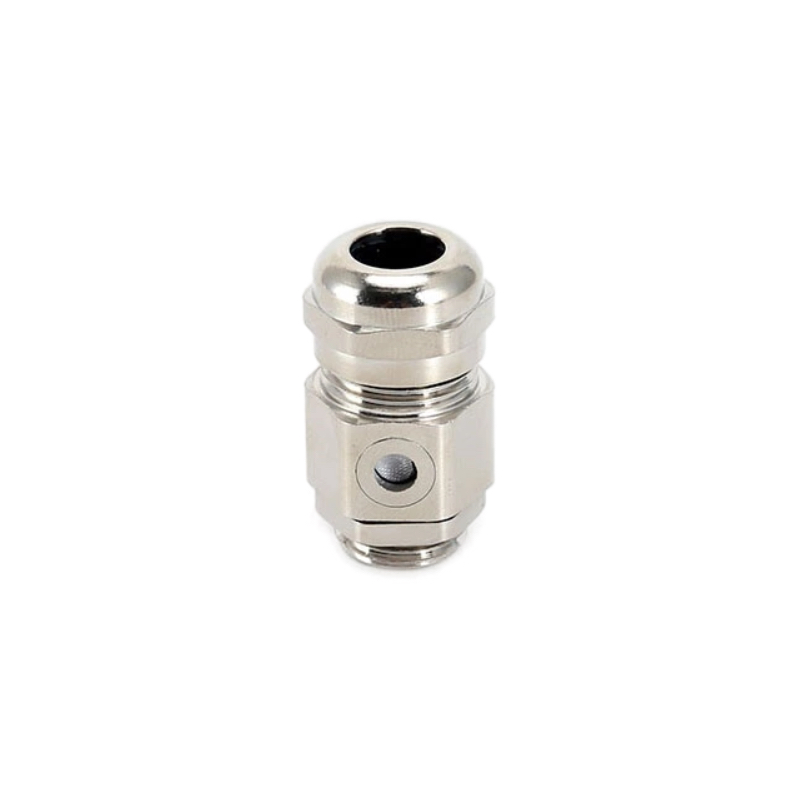
The driving force for vapor transmission is the humidity gradient across the seal. A 90% RH exterior with 10% RH interior creates much higher transmission than balanced conditions. Our breathable vent plugs help equalize pressure while maintaining moisture barriers.
Seal Geometry and Compression
Proper installation is crucial. Under-compressed seals create bypass paths, while over-compression can damage the material structure. Our cable glands feature precision-machined compression chambers that ensure optimal seal performance within specified torque ranges.
Aging and UV Exposure
Material degradation over time increases WVTR significantly. UV exposure, ozone, and chemical contact all contribute to seal deterioration. This is why we incorporate carbon black5 and antioxidants in our outdoor-rated seals, maintaining performance for 20+ years.
How to Select the Right Seal for Your Application?
Selecting optimal WVTR performance requires balancing multiple factors against cost and availability constraints. Here’s our systematic approach developed over thousands of installations:
Step 1: Define Your Environment
- Indoor controlled: WVTR up to 5 g/m²/24h acceptable
- Outdoor temperate: WVTR below 1 g/m²/24h recommended
- Marine/tropical: WVTR below 0.3 g/m²/24h essential
- Critical electronics: WVTR below 0.1 g/m²/24h required
Step 2: Assess Consequences of Failure
High-consequence applications justify premium materials. A $50 Viton seal is insignificant compared to $100,000 in damaged equipment or production downtime.
Step 3: Consider Maintenance Accessibility
Remote or difficult-to-access installations should use the lowest WVTR materials available, even at higher initial cost. Replacement costs often exceed material premiums by 10-20x.
Our Recommendation Framework
For most industrial applications, we recommend our EPDM-sealed cable glands as the optimal balance of performance and cost. The superior vapor barrier properties, combined with excellent chemical resistance and temperature range, make them suitable for 80% of installations.
Upgrade to Viton seals when:
- Operating temperatures exceed 150°C
- Exposure to aggressive chemicals
- Critical applications where failure isn’t acceptable
- Extreme humidity environments (>95% RH sustained)
Consider breathable solutions when:
- Pressure equalization is needed
- Temperature cycling creates condensation risk
- Internal humidity control is required
What Are the Long-term Cost Implications?
The total cost of ownership extends far beyond initial seal material costs. Poor WVTR selection can result in exponentially higher lifetime expenses through premature failures, maintenance, and replacement.
Direct Cost Analysis
Based on our project data across 10,000+ installations:
- Premium seals (Viton): 3.5x material cost, 0.1x failure rate
- Standard seals (EPDM): 1.0x material cost, 0.3x failure rate
- Economy seals (NBR): 0.8x material cost, 2.1x failure rate
Hidden Costs of High WVTR
Moisture ingress creates cascading problems:
- Corrosion: Internal metal components degrade
- Insulation failure: Reduced dielectric strength
- Connection degradation: Increased resistance and heating
- System downtime: Production losses during repairs
A recent analysis of David’s automotive plant showed that switching from standard NBR to our low-WVTR EPDM seals reduced annual maintenance costs by 65% while eliminating unplanned downtime events.
ROI Calculation Framework
For critical applications, calculate payback period:
Payback Period = (Premium Seal Cost – Standard Seal Cost) / (Annual Failure Cost Reduction)
Most of our customers see payback within 6-18 months when upgrading to appropriate WVTR-rated seals for their environment.
Conclusion
Water vapor transmission through cable gland seals represents a critical yet often overlooked factor in electrical system reliability. The dramatic differences in WVTR between seal materials – from 0.02 g/m²/24h for premium Viton to over 45 g/m²/24h for silicone – directly impact long-term performance and total cost of ownership.
At Bepto, we’ve seen the real-world consequences of both proper and improper seal selection across thousands of installations worldwide. The key is matching WVTR performance to your specific environmental demands while considering the total lifecycle costs, not just initial material expenses.
Remember: investing in appropriate vapor barrier performance today prevents exponentially higher costs tomorrow. Whether you need our marine-grade stainless steel cable glands with ultra-low WVTR seals or standard industrial solutions, proper material selection ensures decades of reliable service.
FAQ
Q: What is the difference between IP rating and WVTR in cable glands?
A: IP ratings test liquid water ingress under pressure, while WVTR measures molecular vapor transmission over time. A cable gland can pass IP68 testing but still allow damaging moisture accumulation through high vapor transmission rates.
Q: How do I test WVTR of existing cable gland seals?
A: Professional WVTR testing requires specialized equipment following ASTM E96 or ISO 15106 standards. However, you can assess performance by monitoring internal humidity levels in sealed enclosures over several months in your actual environment.
Q: Can I reduce WVTR by using multiple seals?
A: Yes, series sealing can reduce effective WVTR, but proper material selection is more effective. Two standard seals rarely perform as well as one premium low-WVTR seal, and complexity increases failure risk.
Q: How does temperature cycling affect vapor transmission?
A: Temperature cycling creates pressure differentials that can increase effective WVTR by 2-5x compared to steady-state conditions. This is why we recommend breathable vent plugs for applications with significant temperature variation.
Q: What WVTR should I specify for outdoor electrical enclosures?
A: For outdoor applications, specify WVTR below 1 g/m²/24h for temperate climates, below 0.3 g/m²/24h for tropical/marine environments. Critical electronics should use seals with WVTR below 0.1 g/m²/24h regardless of climate.
-
Learn the scientific principles behind how water vapor permeates through solid materials and how it’s measured. ↩
-
See the specific requirements for the IP68 test, which validates protection against dust and continuous submersion in water. ↩
-
Review the official scope of this key ASTM standard used to determine the Water Vapor Transmission Rate of materials. ↩
-
Explore the chemical resistance, temperature range, and mechanical properties of FKM, a high-performance synthetic rubber. ↩
-
Understand the mechanism by which carbon black protects plastics and elastomers from degradation caused by ultraviolet radiation. ↩